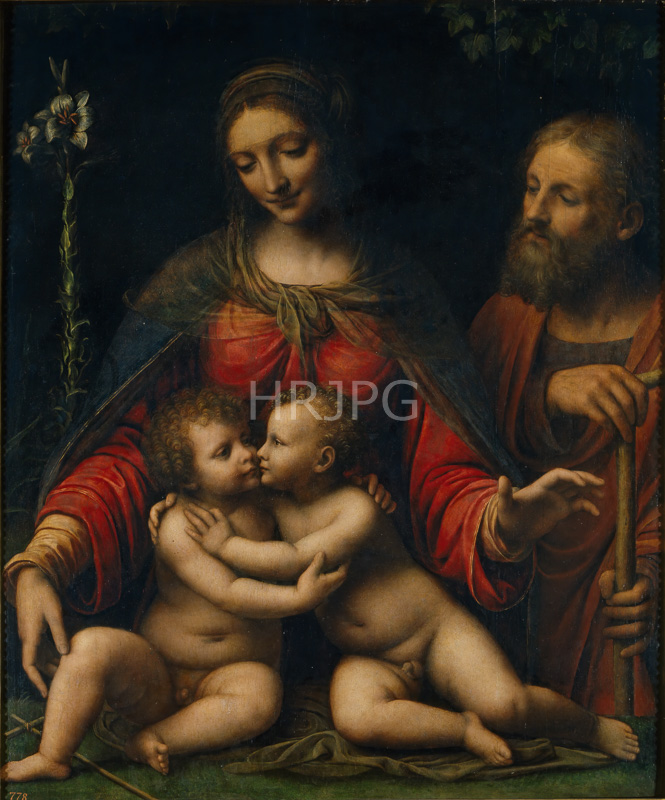
Bernardino Luini’s "The Holy Family" is a quintessential expression of the maternal tenderness and serene devotion that made his work immensely popular in 16th-century Lombardy. Influenced profoundly by Leonardo da Vinci’s psychological insights, Luini managed to soften the master’s intellectual intensity into a visual language characterized by "dolcezza"—a pervasive sweetness and grace. This composition features the Virgin Mary and Saint Joseph watching over the infant Christ and a young Saint John the Baptist. The two children are shown in an intimate embrace, a common Renaissance motif that symbolizes the recognition of Christ’s divine mission by the last of the prophets. The interaction between the figures is quiet and domestic, yet imbued with a monumental dignity that elevates the scene beyond a simple family portrait.
The figure of the Virgin is particularly "Leonardesque," with her downcast eyes, subtle smile, and the soft "sfumato" that blurs the transition between her skin and the surrounding atmosphere. Luini uses a harmonious color palette, where the Virgin’s traditional red gown and blue mantle are set against the earthy tones of Saint Joseph’s clothing and the dark, evocative background. Saint Joseph is depicted as a protective, contemplative figure, his aged features providing a poignant contrast to the smooth, idealized skin of the infants. The lighting is soft and diffused, emerging as if from a divine source to highlight the delicate textures of the hair and the supple modeling of the children’s limbs. This treatment of light creates a sense of warmth and spiritual intimacy that was Luini’s trademark.
The background of the painting, while dark and focused, often hints at the "Vinci-style" jagged blue mountains and misty landscapes that Luini favored in his larger works. In this intimate format, however, the focus remains entirely on the psychological connection between the characters. The way the Virgin gently supports the Christ child while looking toward Saint John suggests a narrative of both joy and prophetic sorrow. Technically, Luini’s mastery of the oil medium is evident in the luminous skin tones and the fluid, rhythmic drapery. His ability to create a sense of three-dimensional volume without harsh outlines reflects a deep understanding of the "Milanese School" principles.
Historically, "The Holy Family" reflects the shifting needs of private devotion in the early 15th century, where patrons sought images that were both intellectually sophisticated and emotionally accessible. Luini was the most successful artist in meeting this demand, and this work remains a prime example of why he was often considered the most "Leonardesque" of all the master’s followers. Now housed in prestigious collections like the Prado or the National Gallery, these images of the Holy Family continue to captivate viewers with their timeless beauty and their profound message of domestic peace and divine love.