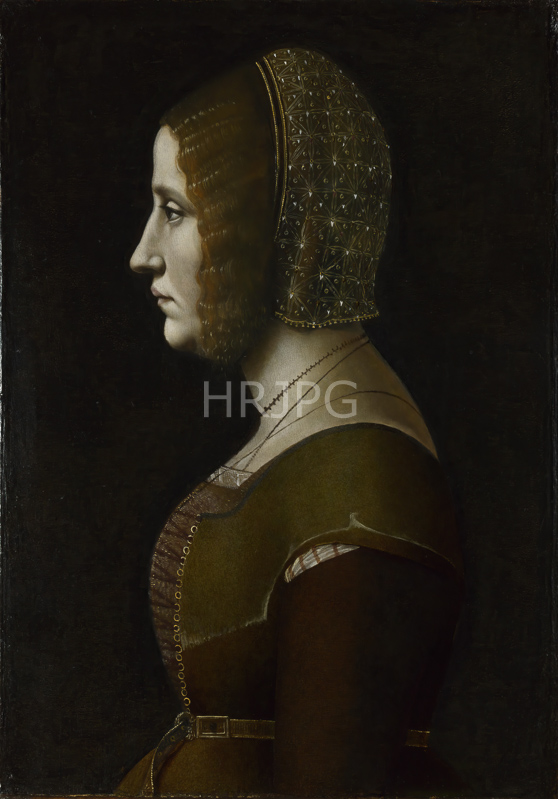
Giovanni Ambrogio de Predis’s "Profile Portrait of a Lady" (likely Beatrice d'Este or another high-ranking Sforza lady) is a pinnacle of the Milanese courtly tradition. De Predis was the preeminent portraitist for Ludovico il Moro, and his style is characterized by a high degree of technical precision and a focus on the material luxury that defined the Milanese Renaissance. In this portrait, a noblewoman is shown in a sharp, pure profile against a stark black background. This format, rooted in the classical medals of antiquity, was the standard for aristocratic likenesses in the late 15th century, projecting an image of noble reserve, social status, and eternal poise. The lady’s attire is a marvel of Renaissance fashion: a rich green dress with intricate gold embroidery and her hair bound in a "coazzone" held together by a jeweled net.
The modeling of the face is achieved through a soft, focused light that highlights the smoothness of the porcelain skin and the rhythmic silhouette of the features. While de Predis lacks the atmospheric mystery of Leonardo, his rendering of the tactile reality of the jewels and fabrics is unsurpassed. The individual pearls on the hair net and the fine gold thread of the embroidery are rendered with a meticulousness that reflects the artist’s background in the decorative arts and his commitment to the "imitation of nature." The dark background serves to project the figure forward, making her physical presence and material wealth the sole focus of the viewer’s gaze. The profile pose eliminates direct interaction with the viewer, creating a sense of distance and monumental dignity.
This portrait serves as an important record of the high cultural sophistication of the Milanese court. The use of the profile was a deliberate choice to align the Sforza family with the great rulers of the past. The influence of Leonardo is visible in the idealized facial features and the soft treatment of the hair, but the overall design remains firmly within de Predis’s own formal and decorative style. During the Renaissance, such portraits were intended to document the lineage and character of the elite, and this work remains one of the most successful examples of its kind. The painting provides a fascinating window into the aesthetic aspirations and political self-fashioning of Milan during its final years of glory under the Sforza dynasty.
Today, as part of the National Gallery’s collection in London, this "Profile Portrait of a Lady" remains one of the most admired examples of the Lombard school. It demonstrates how de Predis successfully balanced the requirements of courtly likeness with the emerging High Renaissance interest in idealized beauty. The painting stands as a testament to the high technical skill and cultural sophistication of the Milanese Renaissance, serving as an enduring icon of an era defined by intellectual ambition and unparalleled material luxury. It is a hauntingly beautiful reminder of the power of art to preserve the memory of a society at its peak.