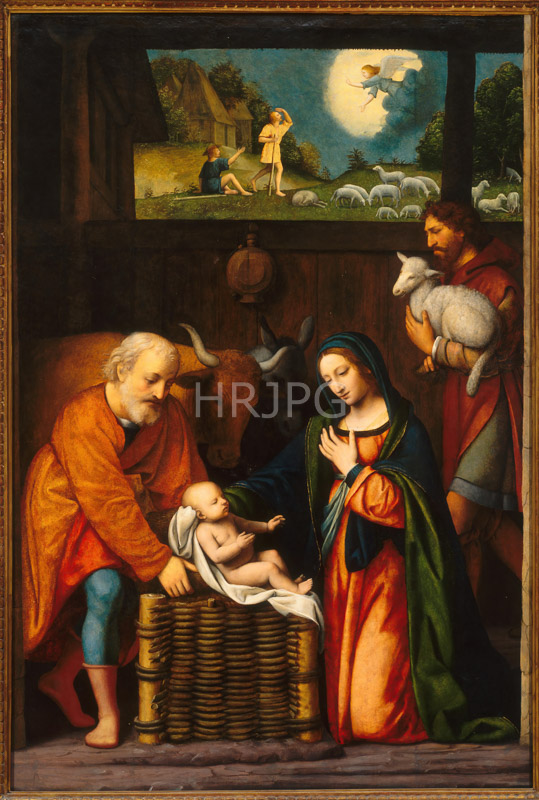
Bernardino Luini’s "Adoration of the Christ Child" is a masterpiece of maternal tenderness and serene devotion, reflecting the "sweet" style that made him the most popular of Leonardo da Vinci’s followers. This panel, likely created during his early mature period, depicts the Virgin Mary and Saint Joseph adoring the infant Christ, who lies in a simple, woven manger. In the distant background, Luini includes the "Annunciation to the Shepherds," a narrative detail that expands the theological scope of the scene. The composition is characterized by a profound sense of stillness and grace, with the figures modeled through a soft, atmospheric "sfumato" that blurs the boundaries between the sacred characters and their environment.
The figure of the Virgin is the epitome of Luini’s aesthetic—idealized features, downcast eyes, and a subtle, enigmatic smile that suggests a complex interior state of joy and prophetic sorrow. Her hands are joined in prayer with a delicate, rhythmic grace that reflects the influence of the Vinci school. Saint Joseph is depicted as a protective, contemplative figure, his aged features providing a poignant contrast to the luminous, porcelain-like skin of the Christ child. The infant Christ is rendered with a remarkable naturalism, his small, chubby anatomy reflecting the scientific studies of human growth pioneered by Leonardo. The use of "chiaroscuro" provides a powerful sense of volume, making the figures appear to emerge from the soft shadows into the viewer’s immediate space of prayer.
The landscape in the background is a marvel of Renaissance atmospheric perspective. Using pale blues and greys, Luini creates a sense of vast, unbridgeable space that recedes toward the horizon where the angels appear to the shepherds. This landscape is populated with the typical "Leonardesque" jagged mountains and winding paths, suggesting a world that is both primeval and divinely ordered. Technically, the work is characterized by a high degree of finish and a harmonious color palette dominated by soft greens, earthy browns, and the Virgin’s traditional red and blue. Luini’s ability to translate complex High Renaissance principles into a visual language of accessible, domestic peace was the key to his immense success. This work stands as a testament to his role as a primary guardian of the "sweet" Vinci style, imbuing even traditional religious subjects with a new sense of High Renaissance dignity and eternal, crystalline grace.