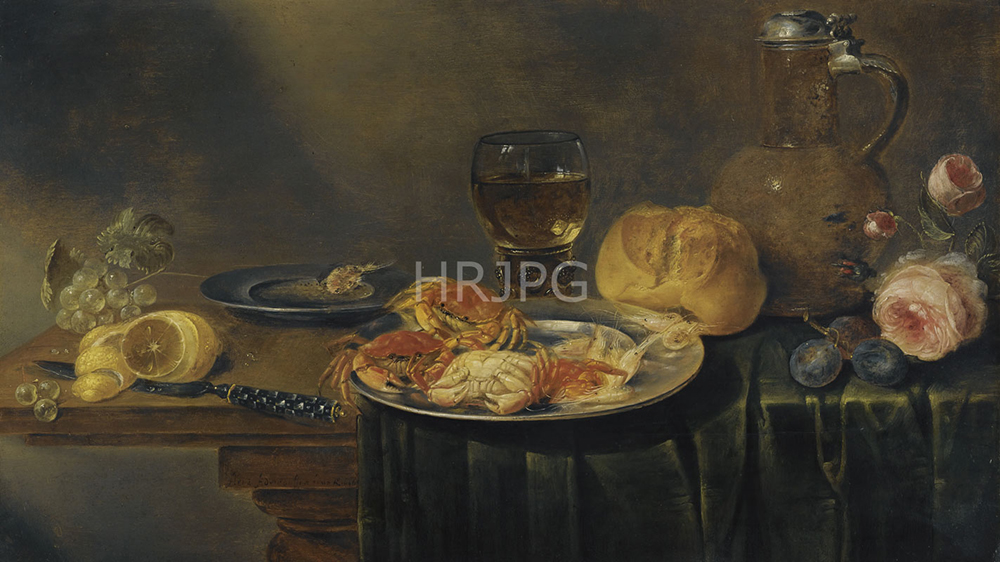
Alexander Adriaenssen’s "Still Life with Roses" (and various tabletop objects) is a superlative example of the Flemish Baroque's obsession with the material world and the fleeting nature of sensory pleasure. Adriaenssen, a master of the Antwerp school, was renowned for his ability to render textures with a tactile realism that invited viewers to reach out and touch the objects. In this 1646 composition, a glass ewer filled with roses is placed alongside a rustic loaf of bread, a filled wine glass, and a silver platter holding succulent crabs and prawns. The arrangement is characterized by a somber, muted color palette dominated by earthy browns, greys, and the vibrant red of the cooked shellfish, creating a visual harmony that is both rich and contemplative.
The technical execution of the varied surfaces is the primary focus of the work. Adriaenssen uses a sharp, focused light to highlight the differing textures: the translucent petals of the roses, the rough, crusted surface of the bread, and the cold, reflective metal of the silver plate. The way the light passes through the wine glass and the glass ewer, creating subtle distortions and reflections, demonstrates the artist’s mastery of optics and the "imitation of nature." Each element is rendered with a scientific precision that reflects the 17th-century interest in cataloging the natural world and the growing prosperity of the merchant classes who commissioned such works for their private homes and studies.
Beyond the technical display, this still life often contains layers of symbolic meaning known as "vanitas." The beautiful roses, already beginning to wilt at the edges, serve as a reminder of the transience of life and the inevitability of decay. The contrast between the fresh flowers and the dead sea creatures encourages the viewer to contemplate the cycle of life and the fleeting nature of beauty and abundance. Adriaenssen’s ability to imbue these mundane objects with a sense of dignity and monumental importance is what elevated him above other still-life painters of his time. The composition is carefully balanced, with the diagonal arrangement of the objects creating a rhythmic flow that leads the viewer’s eye across the variety of forms, from the delicate flora to the solid ewer. It remains a vital document of the Golden Age of Flemish painting, standing as a testament to the era's unique blend of scientific curiosity and poetic melancholy.