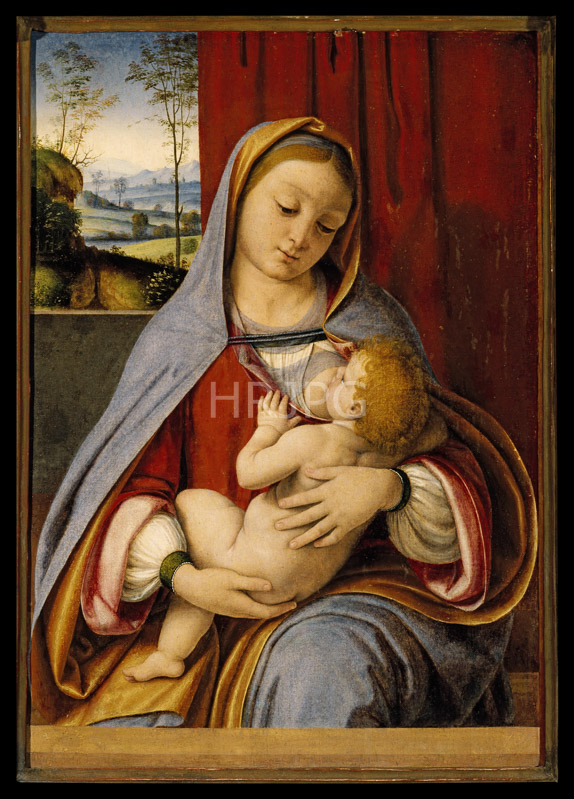
Andrea Solario’s "Virgin Nursing the Christ Child" (Madonna of the Green Cushion variant style) is a masterpiece of technical refinement and emotional intimacy, representing the full maturity of the artist’s Lombard-Flemish synthesis. Solario, who was one of the most traveled and internationally minded of the "Leonardeschi," brought a distinctive tactile clarity to the atmospheric style of Leonardo da Vinci. In this composition, the Virgin Mary is shown tenderly nursing the infant Christ, who lies on her lap. The figures are set against a vibrant, deep-red curtain that provides a rich, theatrical backdrop, while a window on the left reveals a meticulously rendered, atmospheric landscape. This device, known as "looking out," was a favorite of Solario and the Vinci workshop, bridging the domestic sacred space with the vastness of the natural world.
The physical presence of the figures is modeled with an extraordinary sense of volume and clarity. Solario uses a focused light source that highlights the varying textures of the skin—the translucent, porcelain-like quality of the Virgin’s face and the chubby, realistic anatomy of the Christ child. The influence of Leonardo is visible in the soft, rhythmic transitions around the eyes and the corner of the mouth, as well as the idealized, serene expression of the mother. However, Solario’s preference for brilliant, saturated colors and crisp outlines distinguishes him from the more hazy "sfumato" of Luini or Boltraffio. The intricate folds of the Virgin’s green gown and her traditional red tunic are rendered with a sculptural weight and a rich, silken sheen, reflecting the high fashion of the era.
The background landscape is a marvel of aerial perspective. Using pale blues and misty greys, Solario creates a sense of profound space that recedes toward a sunlit horizon. The inclusion of the window allows for a scientific exploration of light and atmosphere, demonstrating Solario’s mastery of optics. This painting reflects the shifting needs of private devotion in the early 16th century, where patrons sought images that were both religiously profound and aesthetically "modern." Technically, the smooth, enamel-like finish of the oil-on-panel reflects Solario’s mastery of his medium and his commitment to the "imitation of nature." As part of prestigious collections like the Louvre or the National Gallery, this work remains one of the most admired examples of the Lombard Renaissance, standing as a testament to Solario’s status as a master who could bridge different European aesthetic traditions to create a unique and enduring vision of sacred beauty.