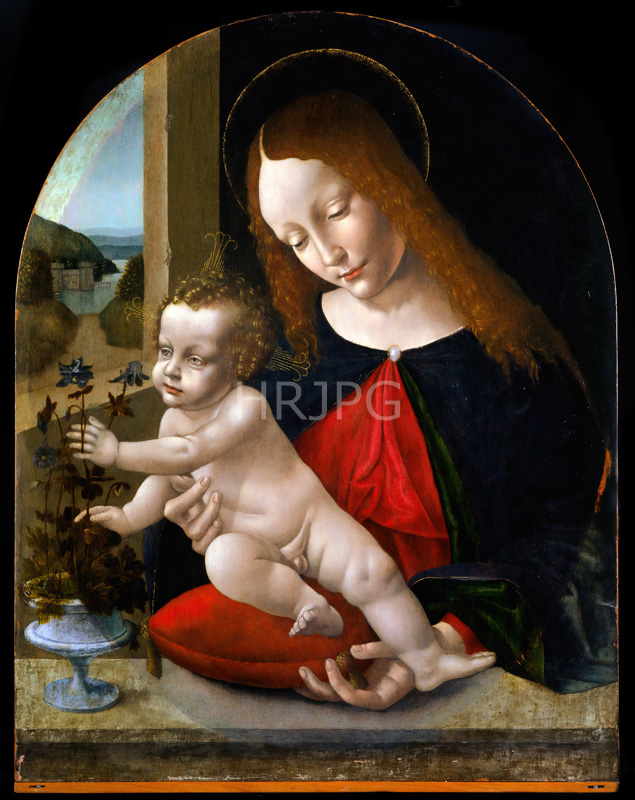
Giampietrino’s "Madonna and Child with a Columbine" is an iconic example of the Milanese school's obsession with the "Leonardesque" ideal and the use of symbolic botanical details. Giampietrino, one of Leonardo da Vinci’s most devoted and technically adept pupils, specialized in creating devotional images characterized by a "cold beauty" and a high degree of finish. In this painting, the Virgin Mary cradles the infant Christ, who sits on a plush, vibrant red cushion. He delicately holds a columbine flower, which in Renaissance iconography was a symbol of the Holy Spirit (due to its resemblance to a dove) and a foreshadowing of the Passion and divine sorrow. The composition is framed by an arched window or opening that reveals a misty, atmospheric landscape, a classic "Vinci-style" device to create spatial depth.
The modeling of the figures is a masterclass in the application of "sfumato." Giampietrino employs ultra-thin layers of oil glazes to achieve incredibly soft transitions between light and shadow, giving the skin a luminous, porcelain-like quality. The Virgin’s face is an idealized vision of High Renaissance grace—downcast eyes, a straight nose, and the subtle, enigmatic smile that became the hallmark of the Vinci circle. The infant Christ is rendered with a remarkable naturalism, his chubby, realistic anatomy reflecting the scientific studies of human growth pioneered by Leonardo. The use of "chiaroscuro" provides a powerful sense of volume, making the figures appear to emerge from the soft shadows of the interior into the viewer’s immediate space of prayer. The contrast between the warm flesh tones and the deep green and red of the fabrics creates a visual harmony that is both striking and contemplative.
Technically, the painting showcases Giampietrino’s mastery of the oil medium and his eye for decorative detail. The intricate patterns of the Virgin’s embroidery and the individual strands of the hair are rendered with a precision that reflects the high standards of the Milanese workshop. During the Renaissance, such images were intended for private display, serving as both a likeness of the divine and a focus for intellectual and spiritual meditation. While Giampietrino was once seen as a mere imitator, modern scholars recognize his role in standardizing and disseminating the High Renaissance style. This "Madonna and Child" stands as a testament to his status as a master in his own right, an artist who could capture the ephemeral qualities of human thought and divine grace through a visual language of peak elegance and technical refinement.