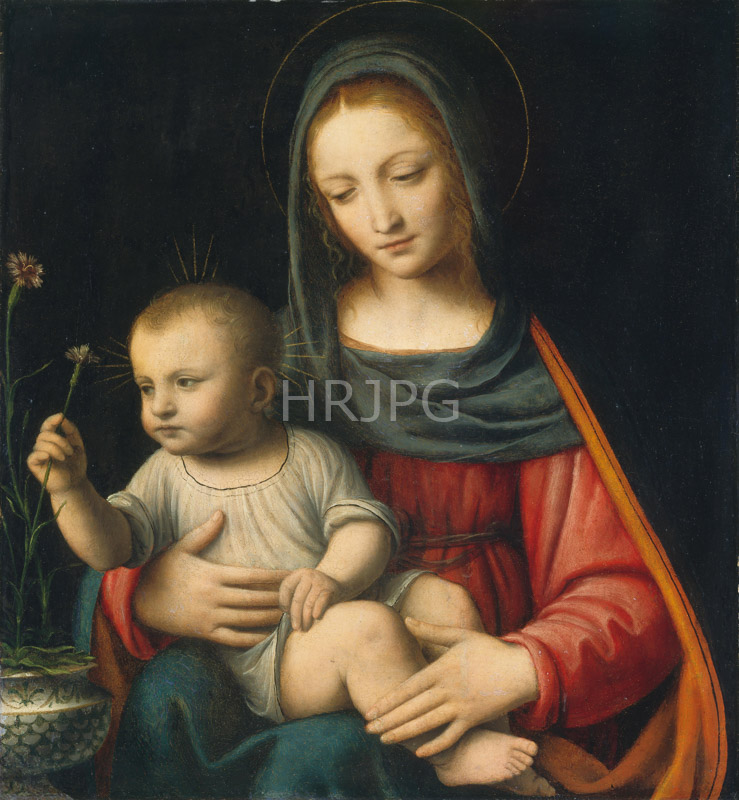
Bernardino Luini’s "Madonna of the Carnation" is a masterpiece of the "sweet" style and a quintessential expression of High Renaissance maternal tenderness. This panel, created during Luini’s full maturity, depicts the Virgin Mary supporting the infant Christ, who holds a pink carnation. In Renaissance iconography, the carnation was a multifaceted symbol, often representing divine love, marriage, and the Passion of Christ (as the word "carnation" is derived from the Latin for "flesh" or "incarnation"). The composition is characterized by a profound sense of stillness and grace, with the figures modeled through a soft, atmospheric "sfumato" that blurs the boundaries between the sacred characters and their environment.
The figure of the Virgin is the epitome of Luini’s aesthetic—idealized features, downcast eyes, and the subtle, enigmatic smile that became his signature. Her skin is modeled with ultra-thin layers of oil glazes, giving it a luminous, porcelain-like quality. The infant Christ is rendered with a remarkable naturalism, his chubby anatomy and focused gaze toward the flower reflecting the scientific studies of human growth pioneered by Leonardo. The lighting is soft and diffused, appearing to emerge as if from a divine source to highlight the delicate textures of the hair and the complex folds of the Virgin’s traditional red and blue garments. This treatment of light creates a sense of warmth and spiritual intimacy that was Luini’s trademark and the reason for his immense popularity.
The background, though often dark and focused, suggests the cosmic scale of the sacred event through the subtle use of shadow and depth. Technically, the work is characterized by a high degree of finish and a harmonious color palette dominated by warm flesh tones and primary colors. Luini’s ability to take the master's radical intellectualism and transform it into a visual language that was accessible and universally admired was the key to his lasting legacy. During the early 16th century, such images were highly sought after for private devotion, providing the viewer with a beautiful and emotionally resonant object for meditation. This work stands as a testament to Luini’s role as the primary successor of Leonardo’s legacy in Lombardy, an artist who could capture the deepest mysteries of faith through a visual language of peak elegance and profound human relevance.