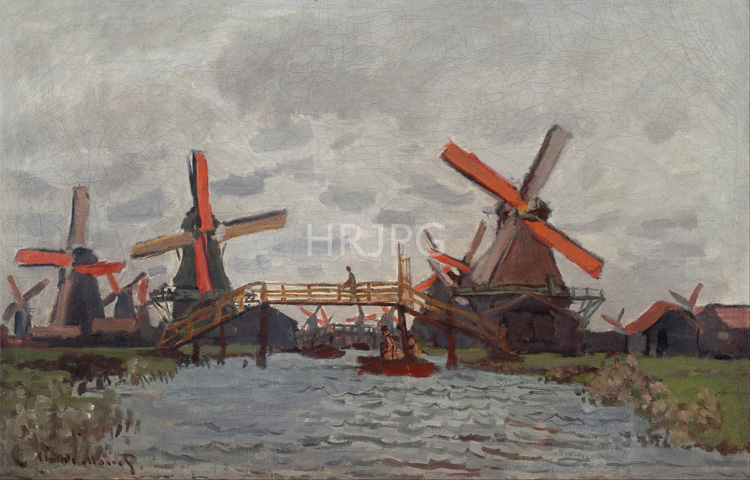
The visual logic of the painting is defined by the extraordinary symmetry between the windmills and their reflections in the water. Monet utilizes a sophisticated and restricted palette of cool greens, muted ochres, and pale blues to represent the Dutch atmosphere. The sky is a masterclass in tonal variation, with layers of soft, moisture-laden clouds that diffuse the light across the landscape. The windmills are rendered as rhythmic, geometric forms that provide a strong structural framework for the composition. The water in the foreground is as smooth as glass, acting as a liquid mirror that doubles the visual data of the architecture. This 'mirror effect' creates a sense of profound stillness and natural order, reflecting Monet’s interest in the decorative patterns and flattened space of Japanese prints. He avoids hard lines, relying on the juxtaposition of color values to define depth and form.
Technically, Windmills at Westzijderveld showcases Monet’s early mastery of texture and tonal harmony. He used a confident application of paint to build up the surface of the water and the wooden structures, giving the scene a tangible presence. He avoids traditional black even in the shadows, using deep blues and purples to maintain a consistent luminosity throughout. This focus on the optical truth of a single moment—the way the clouds transform the colors of the river—prefigures his lifelong obsession with 'instantaneity.' Historically, the Zaandam period was a major success for the young artist, and the works he produced there were highly sought after by collectors. Today, held in major collections such as the Rijksmuseum and the Musée d'Orsay, the painting is admired for its lyrical beauty and its technical virtuosity. It remains a vital document of Monet's early career, illustrating the bridge between his early outdoor observations and the visionary reflections of his later years.