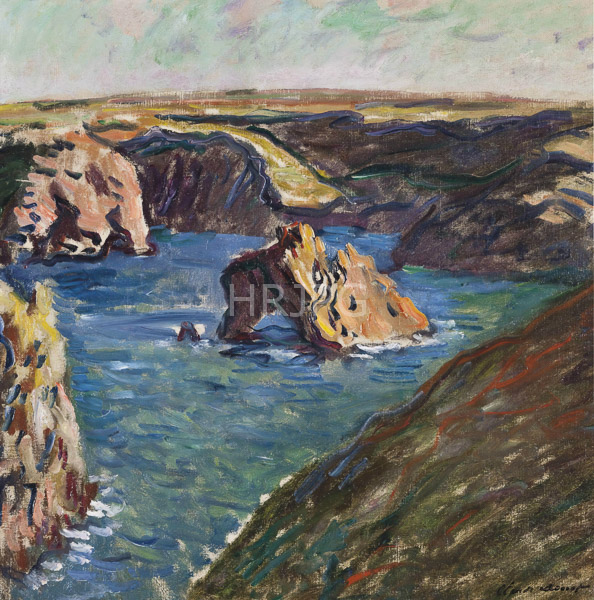
The visual logic of the painting is defined by the extraordinary contrast between the dark, massive forms of the rocks and the brilliant, foamy white of the waves. Monet utilizes a palette of deep indigos, murky greens, and earthy purples to represent the raw nature of the Brittany coast. The sky is a masterclass in atmospheric observation, with heavy, gray-blue clouds that suggest a moisture-laden air. The light is diffused and cool, reflecting the unique lighting conditions of a stormy day in the Atlantic. He avoids hard outlines, allowing the sea spray to blur the boundaries between the water and the stone, creating a unified and immersive environment. The brushwork is vigorous and rhythmic, mirroring the physical energy of the water as it crashes against the ancient rocks, giving the landscape a tangible, sculptural presence.
Technically, The Rocks at Belle-Ile showcases Monet’s mastery of texture and tonal unity. He used thick impasto for the crests of the waves and the rugged surface of the rocks, giving the scene a physical weight that reflects the harshness of the environment. He avoids the use of black, using saturated blues and purples in the shadows to maintain the painting's overall luminosity. Historically, the Belle-Ile series represents one of Monet's first systematic efforts to explore a single location under extreme weather conditions. Today, held in major collections such as the Musée d'Orsay and the Art Institute of Chicago, the painting is admired for its raw power and its profound sense of solitude. It remains a vital link in his career, illustrating the moment when he moved from being a painter of light to a master of the universal landscape.