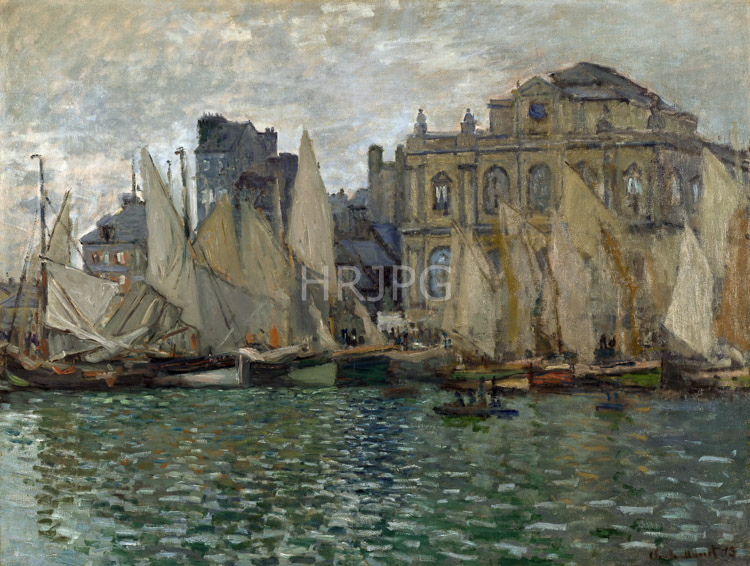
The visual logic of the painting is defined by the contrast between the rigid, geometric lines of the building and the fluid, shimmering surface of the water. Monet utilizes a palette of cool grays, deep indigos, and muted ochres to represent the moisture-laden atmosphere. The sky is a masterclass in early Impressionist tonal variation, with layers of scudding clouds that diffuse the sunlight across the harbor. The figures in the foreground provide a sense of scale and social reality, their dark silhouettes acting as structural anchors for the composition. He avoids hard outlines, relying instead on the juxtaposition of tonal values to define form and depth. This chromatic approach gives the entire scene a vibrating, lifelike quality that mimics the actual experience of human vision on a breezy morning.
Technically, The Museum at Le Havre showcases Monet’s early mastery of texture and tonal harmony. He used a confident application of paint to build up the surface of the water and the stone, giving the scene a tangible presence. He avoids traditional black even in the shadows, using deep blues and purples to maintain the painting's overall luminosity. Historically, this work represents the foundation of his lifelong connection to the sea and his desire to find beauty in the direct observation of nature. Today, held in major collections such as the National Gallery in London, the painting is admired for its freshness and its pioneering spirit. It serves as a vital bridge between the Realism of the mid-19th century and the emerging Impressionist spirit, reminding us that for Monet, every environment was a symphony of light.