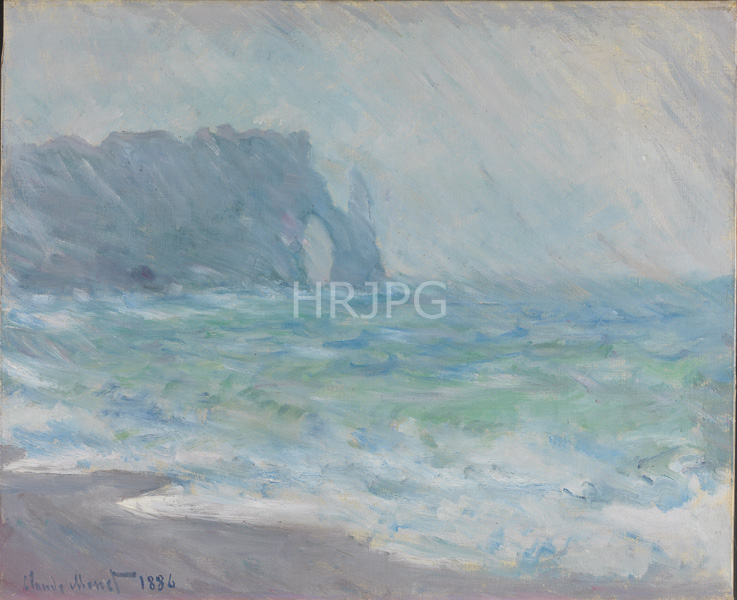
The visual logic of the painting is defined by the extraordinary contrast between the dark, massive arch and the multifaceted 'gray' of the rainy sky and water. Monet utilizes a palette dominated by leaden grays, murky indigos, and soft violets to represent the stormy environment. The arch is rendered as a massive, simplified form of light and shadow, its textured surface appearing to blur under the influence of the rain. The sea in the foreground is rendered with rhythmic, horizontal brushstrokes that capture the flickering energy of the waves and the spray. He avoids hard outlines entirely, relying on the vibration of color to define form and depth. This focus on the 'instantaneity' of the light—capturing the visual sensation of a single moment before the storm shifted—was the ultimate goal of his project.
Technically, The Manneporte Etretat in the Rain showcases Monet’s mastery of 'all-over' texture. He applied the paint in thick, vibrating layers of impasto, giving the surface a physical presence that mimics the tactile quality of the damp air and the wet stone. He avoids the use of black, using deep blues and saturated purples in the shadows to maintain the painting's overall luminosity despite the somber mood. Historically, the Étretat series represents one of Monet's first systematic efforts to explore a single location under varying weather conditions. Today, held in major collections such as the Metropolitan Museum of Art and the Musée d'Orsay, the painting is admired for its raw power and its profound sense of solitude. It remains a cornerstone of modern art, illustrating the perfect union between his revolutionary eye and the natural world.