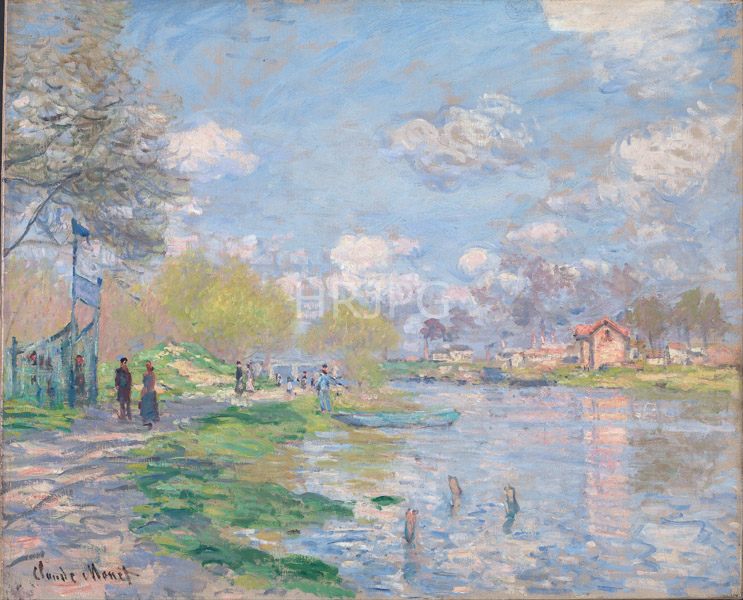
The visual logic of the painting is defined by the extraordinary play of dappled sunlight as it filters through the trees and illuminates the foliage. Monet utilizes a palette of vibrant greens, soft pinks, and brilliant whites to represent the spring 'envelope.' The trees are rendered with a tactile weight, their blossoming branches catching the brilliance of the sun and creating a shimmering pattern of light across the water. The sky is a masterclass in atmospheric light, with layers of pale blue and soft clouds that suggest a warm, breezy afternoon. He avoids hard outlines, relying instead on the juxtaposition of tonal values to define form and space. This 'all-over' texture creates a vibrating surface that mimics the sensory experience of standing by the river, feeling the warmth and vitality of the spring air.
Technically, Spring by the Seine showcases Monet’s early mastery of 'broken color' and gestural application. The brushwork is exceptionally free and spontaneous, reflecting the speed required to capture the shifting patterns of light and the movement of the breeze in the leaves. He avoids the use of black entirely, using deep blues and purples in the shadows to maintain the painting's overall luminosity. Historically, the Argenteuil paintings reflect the post-war prosperity and the emergence of the suburbs as a primary site of modern leisure. Today, held in major collections such as the National Gallery of Art and the Musée d'Orsay, the painting is admired for its formal strength and its pioneering spirit. It remains a cornerstone of early Impressionism, illustrating the perfect union between the artist’s revolutionary eye and the natural world he sought to record with such passion and honesty.