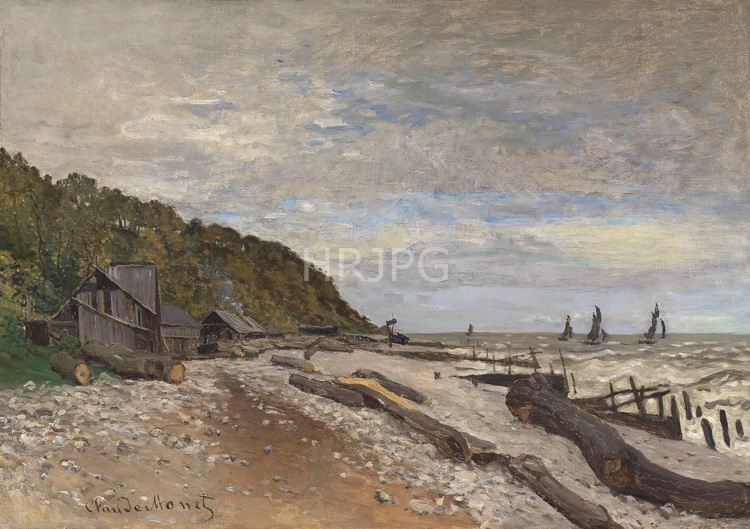
The visual logic of the painting is defined by the extraordinary interplay of textures between the shore and the sea. Monet utilizes a sophisticated and restricted palette of earthy browns, deep emeralds, and leaden grays to represent the atmospheric 'envelope' of a coastal day. The foreground is dominated by massive, weathered logs and humble wooden sheds, which provide a strong structural framework and a sense of physical weight. These elements anchor the composition, leading the viewer's eye across the pebble-strewn beach toward the fluid, shimmering surface of the sea. The distant sailboats act as rhythmic silhouettes on the horizon, catching the soft, diffused light of the morning. Unlike the celebratory leisure scenes he would paint in Argenteuil a decade later, this work focuses on the raw, unpolished beauty of the maritime environment, where humanity’s presence is small but integrated into the vastness of nature.
Technically, Beach at Honfleur showcases Monet’s early mastery of impasto and tonal unity. He applied the paint with a confident, almost sculptural hand, using thick layers to build up the surface of the rocky shore and the weathered timber. The sky is a masterclass in early atmospheric observation, with layers of heavy, moisture-laden clouds that suggest the movement and pressure of the maritime air. He avoids traditional black even in the deepest shadows of the sheds and logs, opting for deep indigos and umbers to maintain a consistent luminosity throughout the composition. This focus on the sensory 'impression' of the scene—the dampness of the sand and the coolness of the air—was a radical innovation. The brushwork in the foliage on the cliff side shows the first signs of the 'broken color' technique, with quick, staccato dabs of green and ochre that prefigure his later breakthroughs.
Historically, this work represents the peak of Monet's early development and the birth of the Impressionist spirit. It reflects the direct influence of Boudin's 'plein air' philosophies, emphasizing that the first impression is the most honest. During this 1864 campaign, Monet was beginning to understand that the true subject of a painting was not the objects themselves, but the light and air that unified them. This work marks a departure from historical or narrative subjects toward a modern celebration of the contemporary world. Today, held in the collection of the Los Angeles County Museum of Art (LACMA), the painting is admired for its formal strength and its pioneering spirit. It serves as a vital bridge between the Realism of the mid-19th century and the emerging visionary style of the high Impressionist era, reminding us that Monet's journey toward the light began with a rigorous and passionate observation of the rugged French coast."