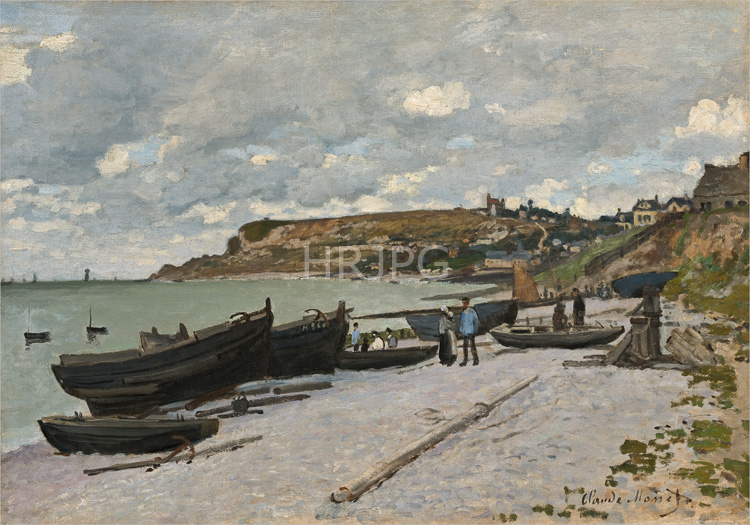
The visual logic of the painting is defined by the extraordinary play of light and atmosphere as they transform the simple elements of the shoreline. Monet utilizes a sophisticated palette dominated by cool grays, deep indigos, and muted ochres to represent the moisture-laden air. The beach in the foreground is rendered with a tactile weight, its pebbles and damp sand captured in a play of subtle reflections from the scudding clouds above. The dark, wooden hulls of the fishing boats provide a strong structural framework for the composition, their rhythmic arrangement leading the viewer's eye toward the infinite horizon. Unlike its companion piece featuring sun-drenched regattas, this version focuses on the quiet, everyday reality of the coastal community. The light is the primary actor, diffused and soft, creating a shimmering 'envelope' of salty air that makes the atmosphere feel as physical as the stone architecture of the distant houses on the cliff.
Technically, The Beach at Sainte-Adresse showcases Monet's early mastery of texture and tonal harmony. He used a confident application of paint to build up the surface of the water and the shore, giving the scene a tangible presence. The brushwork is varied and gestural; he uses short, staccato marks for the details of the boats and more fluid, horizontal strokes for the sea. He avoids traditional black even in the deepest shadows of the hulls, using deep blues and purples to maintain a consistent luminosity throughout the composition. This chromatic approach ensures that the painting feels alive and breathing, capturing the 'instantaneity' of the coastal weather before the fog shifted. This focus on the sensory 'impression' of the scene—the dampness of the air and the smell of the salt—was a radical innovation in 19th-century landscape painting, proving that the Impressionist method could find monumental beauty in even the most somber of settings.
Historically, this work represents the peak of Monet's early career and the birth of the Impressionist spirit. It reflects the influence of his mentors, Eugène Boudin and Johan Barthold Jongkind, but already shows an artist who was looking beyond the rules of the studio to find a new, modern poetry in his local environment. This painting was part of his effort to demonstrate how a single location could be transformed by shifting weather and time, a concept that would later culminate in his great series paintings. Today, held in major collections such as the Art Institute of Chicago, the painting is admired for its formal strength and its pioneering spirit. It serves as a vital bridge between the Realism of the mid-19th century and the visionary, light-obsessed masterpieces of his later career, reminding us that for Monet, the beauty of the world was found in the vibration of the light and the honesty of the eye."