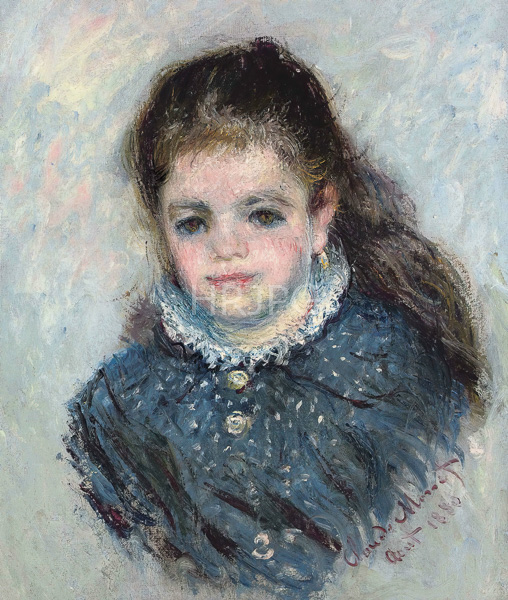
The visual logic of the painting is defined by the extraordinary play of natural light on the young girl's face and clothing. Monet utilizes a palette dominated by soft pinks, warm ochres, and deep indigos to represent the interior environment. Jeanne is depicted with a characteristic Impressionist shorthand, her form integrated into the environment through the play of light and shadow rather than hard outlines. The shadows across her dress and the chair are rendered in cool purples and blues, maintaining a consistent luminosity throughout. This chromatic approach gives the entire scene a vibrating, lifelike quality that mimics the actual experience of human vision. The portrait is not just a likeness; it is a document of the artist's ability to find beauty in the quiet moments of domestic life.
Technically, the 1880 Portrait of Jeanne Serveau showcases Monet’s mastery of texture and tonal harmony. He used a confident application of paint to build up the surface of the face and the fabric, giving the figure a tangible presence. He avoids traditional black even in the shadows, using deep blues and purples to maintain the painting's overall luminosity. Historically, this work represents the stability and peace Monet sought in Vétheuil after a period of deep personal tragedy. Today, held in major private collections and occasionally exhibited in institutions like the Musée d'Orsay, the painting is admired for its formal strength and its evocative mood. It serves as a reminder that for Monet, every subject—whether a cathedral or a young girl—was a vehicle for the same radical investigation into the nature of perception and the beauty of the present moment.