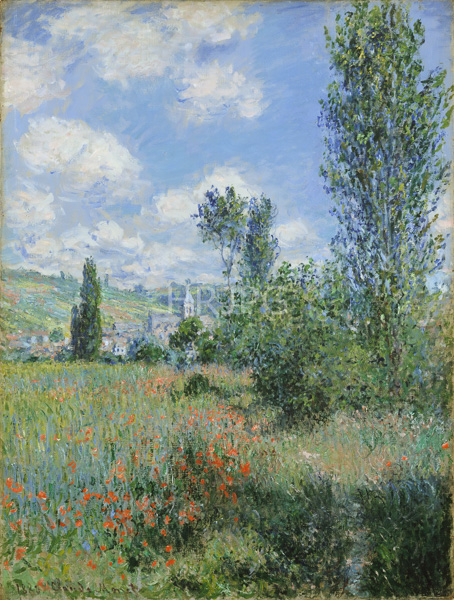
The visual center of the painting is the extraordinary explosion of red poppies, which Monet renders with a tactile weight and rhythmic energy. He utilizes a palette of brilliant cadmiums, deep emeralds, and warm ochres to represent the summer light. The path provides a strong diagonal that leads the eye into the depth of the composition, while the trees in the background provide a vertical rhythm that anchors the scene. The sunlight is the primary actor, raking across the field and creating a shimmering 'envelope' of light that unifies the flowers and the atmosphere. He avoids hard outlines, relying instead on the vibration of color against color to define form and space. This 'all-over' texture creates a shimmering surface that mimics the sensory experience of standing in a sun-drenched field, feeling the warmth and vitality of the summer air.
Technically, Lane in the Poppy Fields showcases Monet’s mastery of texture and his move toward a more gestural style. He applied the paint in thick, rhythmic dabs of impasto, giving the floral clusters a tangible, sculptural presence. He avoids the use of black entirely, using deep indigos and violets in the shadows to maintain the painting's overall luminosity. Historically, the poppies were a favorite subject for Monet, allowing him to explore the limits of color intensity. Today, held in major collections such as the Metropolitan Museum of Art, the painting is admired for its freshness and its lyrical beauty. It serves as a vital document of Monet's creative process, illustrating the bridge between his early outdoor observations and the visionary landscapes of his final years, reminding us that for him, the beauty of nature was found in the vibration of the light.