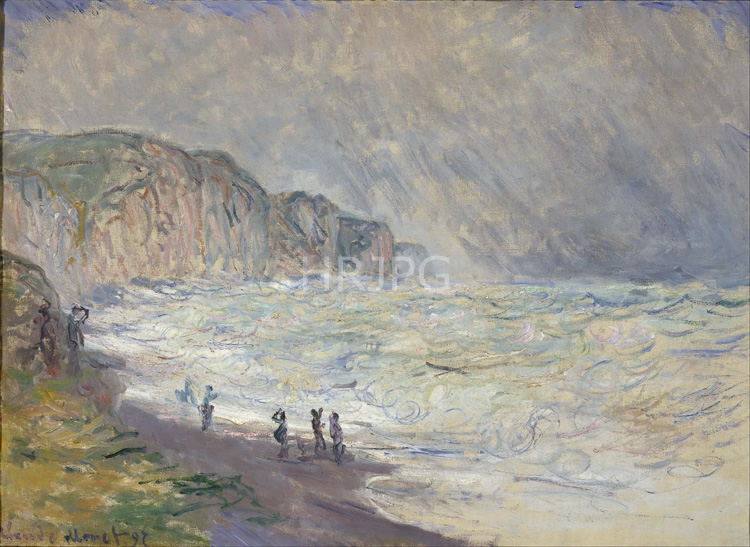
The visual logic of the painting is defined by the extraordinary movement of the waves and the immense depth of the horizon. Monet utilizes a palette of deep turquoises, soft violets, and leaden grays to represent the maritime environment. The sky is a masterclass in atmospheric observation, with layers of heavy clouds that diffuse the light across the landscape. The sea in the foreground is rendered with rhythmic, horizontal brushstrokes that capture the flickering energy of the waves and the spray of the foam. He avoids hard outlines entirely, relying on the vibration of tonal values to define form and depth. This focus on the 'instantaneity' of the light—capturing the visual sensation of a stormy afternoon before the weather shifted—was the ultimate goal of his mature coastal campaign.
Technically, Heavy Sea at Pourville showcases Monet’s mastery of texture and tonal unity. He used thick impasto for the crests of the waves, giving the water a tangible, sculptural presence that mirrors the actual experience of standing on the shoreline. He avoids the use of black, using deep indigos and cool purples in the shadows to maintain the painting's overall luminosity despite the somber mood. Historically, the works of 1896-1897 represent a period of artistic synthesis for Monet, where he combined his early interest in topography with his late-career obsession with series painting. Today, versions of this work are held in major collections such as the National Gallery of Art and the Musée d'Orsay. It remains a cornerstone of modern art, illustrating the perfect union between his revolutionary eye and the natural world he sought to record with such honesty and passion.