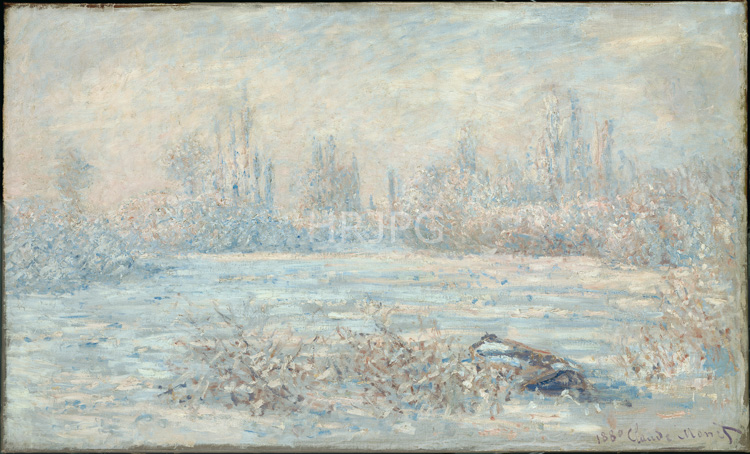
The visual logic of the painting is defined by the extraordinary contrast between the dark forms of the skeletal trees and the multifaceted 'white' of the frost-covered ground. Monet utilizes a restricted and sophisticated palette of icy blues, soft pinks, and leaden grays to represent the frozen atmosphere. The light is diffused and cool, suggesting a day of high clouds where the sun is muted, creating a soft, even luminosity across the scene. The shadows across the snow and the frost-laden branches are rendered in deep purples and indigos, reflecting the color of the clear winter sky—a radical departure from the black shadows of traditional painting. He avoids hard outlines entirely, allowing the damp, cold air to blur the boundaries between the land and the sky, creating a unified and immersive environment.
Technically, Frost near Vetheuil showcases Monet’s early mastery of texture and his rejection of traditional perspective. He used thick impasto for the heavy frost, giving the landscape a tangible, sculptural presence that mimics the sensory experience of standing in the cold, crisp air. He avoids the use of black, using saturated blues and cool grays to maintain the painting's overall luminosity despite the somber winter mood. Historically, the winter works of 1880 were a major professional achievement, proving that the Impressionist method could find beauty in even the harshest of seasons. Today, held in major collections such as the Musée d'Orsay and the National Gallery of Art, the painting remains a moving document of Monet's engagement with the raw forces of nature. It serves as a vital bridge between his early outdoor observations and the visionary series of his later years.