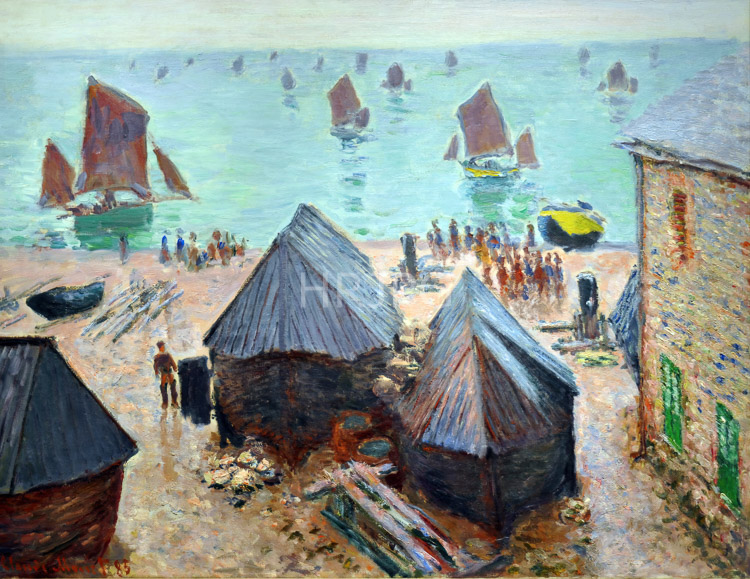
The visual center of the painting is the rhythmic arrangement of the sailboats, their dark hulls and white sails providing a strong structural counterpoint to the horizontal expanse of the sea. Monet utilizes a palette of azure blues, soft grays, and warm ochres to represent the maritime atmosphere. The sky is a masterclass in atmospheric light, with layers of scudding clouds that suggest the moisture and movement of the salt-laden air. The water in the foreground is treated with rhythmic strokes of blue and white, reflecting the shimmering intensity of the morning sun. He avoids hard outlines, relying instead on the vibration of tonal values to define the forms and the depth of the receding water. The light is the primary actor, raking across the scene and making the atmosphere feel as tangible as the wooden hulls of the boats.
Technically, The Departure of the Boats showcases Monet’s mastery of 'broken color' and gestural application. He used a confident, impasto technique to build up the surface of the waves and the sails, giving the scene a tangible presence. He avoids traditional black even in the shadows, using deep blues and purples to maintain a consistent luminosity throughout. This focus on the optical truth of a single moment—capturing the departure before the light shifted—prefigures his lifelong obsession with 'instantaneity.' Historically, the Étretat series was a critical success, proving that the Impressionist method could handle subjects of grandeur and social realism with equal power. Today, held in major collections such as the Musée d'Orsay and the Art Institute of Chicago, the painting remains a beloved icon of his coastal oeuvre.