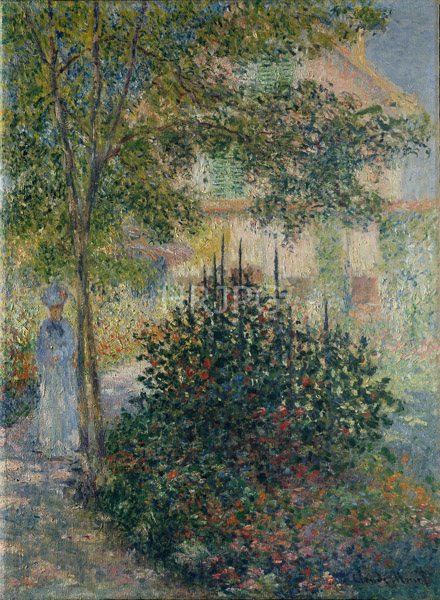
The visual logic of the painting is defined by the extraordinary play of sunlight filtering through the trees and illuminating the flowerbeds. Monet utilizes a palette of vibrant reds, deep emeralds, and brilliant whites to represent the summer 'envelope.' Camille provide a crucial sense of scale and a human element, her light-colored dress catching the brilliance of the sun and creating a shimmering 'envelope' of air. The brushwork is exceptionally free and spontaneous, reflecting the speed required to capture the shifting patterns of light and the movement of the breeze in the leaves. He avoids hard outlines, allowing the atmosphere to blur the boundaries between the figure and the garden, creating a unified and immersive environment. The light is the primary actor, raking across the path and illuminating the edges of the leaves with a natural clarity.
Technically, this 1873 garden scene showcases Monet’s early mastery of 'broken color' and gestural application. He applied the paint in short, rhythmic dabs for the flowers and more fluid strokes for the foliage, creating a textured surface that has a physical presence of its own. Historically, the Argenteuil paintings reflect the post-war prosperity and the emergence of the middle-class garden as a primary site of modern leisure. Today, held in major collections such as the National Gallery of Art and the Musée d'Orsay, the painting is admired for its formal strength and its evocative mood. It serves as a vital document of Monet's creative process and his deep emotional connection to his family, forever capturing the essence of a sun-drenched moment in his first great garden sanctuary.