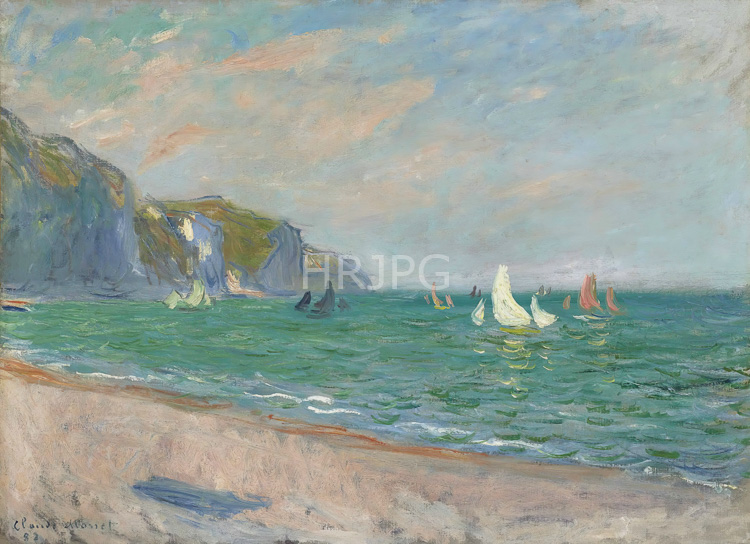
The visual logic of the painting is defined by the high-angled perspective and the dramatic contrast between the massive limestone cliffs and the shimmering water. Monet utilizes a palette of brilliant turquoises, soft violets, and warm ochres to represent the coastal atmosphere. The boats in the foreground provide a crucial sense of scale and a rhythmic focal point, their dark hulls catching the brilliance of the sun and creating a shimmering pattern of reflections in the tide. The sky is a masterclass in atmospheric light, with pale blues and soft clouds suggesting a bright, breezy afternoon. He avoids hard outlines, relying entirely on the vibration of color and value to suggest the depth and form of the landscape. The light is the primary actor, raking across the cliffs and making the atmosphere feel as tangible as the stone.
Technically, Boats Below the Pourville Cliffs showcases Monet’s mastery of texture and light. He used a confident, impasto technique to build up the surface of the cliffs and the waves, giving the scene a tangible presence. He avoids the use of black, using deep indigos and cool greens in the shadows to maintain the painting's overall luminosity. Historically, the Pourville series represents the beginning of his systematic investigation into the landscape through light. Today, held in major collections such as the Thyssen-Bornemisza Museum or the Musée d'Orsay, the painting is admired for its formal strength and its lyrical beauty. It remains a cornerstone of modern art, illustrating the perfect union between his revolutionary eye and the natural world he sought to record with such honesty and passion.