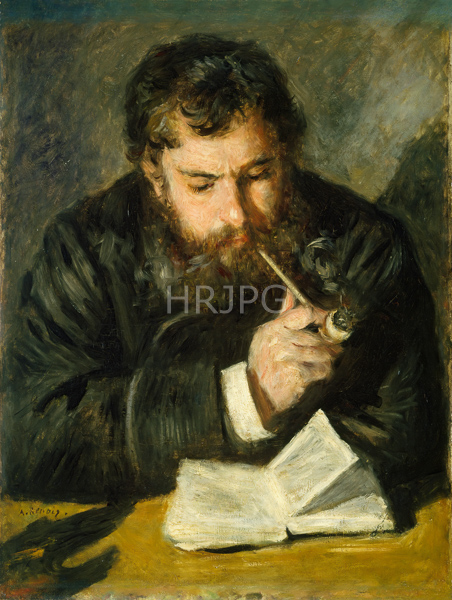
The visual logic of the painting is defined by the extraordinary play of light as it filters into the room and illuminates Monet’s face and the pages of the paper. Renoir utilizes a palette of warm ochres, deep indigos, and muted grays to represent the interior environment. Monet is depicted with a characteristic Impressionist shorthand, his form integrated into the environment through the play of light and shadow rather than hard outlines. The shadows across his jacket and the chair are rendered in cool purples and blues, maintaining a consistent luminosity throughout. This chromatic approach gives the entire scene a vibrating, lifelike quality that mimics the actual experience of a quiet afternoon. The portrait is not just a likeness; it is a document of the deep friendship and intellectual bond between the two masters as they challenged the foundations of Western art.
Technically, the 1872 Portrait of Claude Monet showcases Renoir’s early mastery of texture and tonal harmony. He used a confident application of paint to build up the surface of the face and the fabric, giving the figure a tangible presence. He avoids traditional black even in the shadows, using deep blues and purples to maintain the painting's overall luminosity. Historically, this work represents the stability and hope of the early Argenteuil years, reflecting the shared professional commitment of the Impressionist group. Today, held in the collection of the Musée d'Orsay, the painting is admired for its formal strength and its evocative mood. It serves as a vital document of the creative process of the era, illustrating the bridge between traditional portraiture and the atmospheric investigations of the Impressionist style.