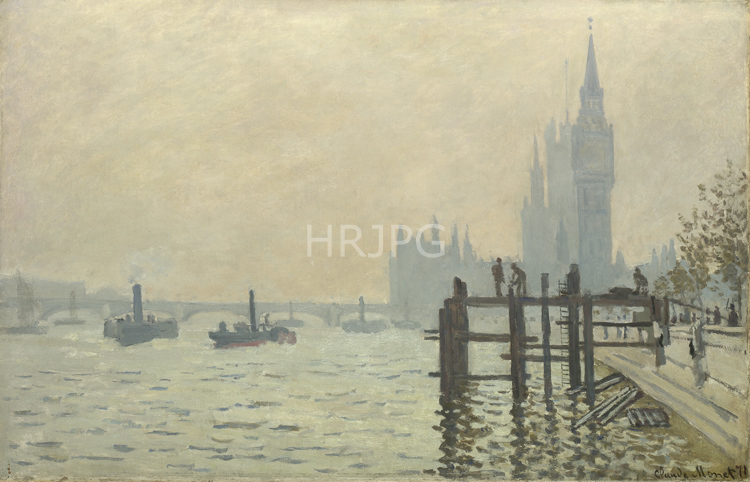
The visual logic of the painting is defined by the horizontal expanse of the Thames and the vertical rhythm of the distant Gothic towers. Monet utilizes a sophisticated and restricted palette of cool grays, murky indigos, and muted ochres to represent the moisture-laden atmosphere. The sky is a masterclass in early Impressionist tonal variation, with layers of fog that diffuse the sunlight and blur the boundaries between the buildings and the clouds. The river in the foreground is rendered with horizontal, rhythmic brushstrokes that capture the flickering reflections of the sky and the dark shapes of the barges. He avoids hard outlines, relying instead on the juxtaposition of tonal values to define form and depth. This focus on the sensory 'impression' of the scene—the dampness and the soft light—was a radical innovation that prefigured the high Impressionism of the late 1870s.
Technically, The Thames at Westminster showcases Monet’s early mastery of texture and tonal harmony. He used a confident application of paint to build up the surface of the water and the mist, giving the scene a tangible presence despite its ethereal subject. He avoids traditional black even in the deepest shadows, using deep blues and purples to maintain a consistent luminosity throughout. Historically, this work represents the start of his 'London campaign,' a project he would return to decades later with even greater abstraction. Today, held in the collection of the National Gallery in London, the painting is admired for its freshness and its pioneering spirit. It remains a vital document of Monet's creative process, illustrating the bridge between his early Realist foundations and the visionary, atmospheric investigations of his mature style.