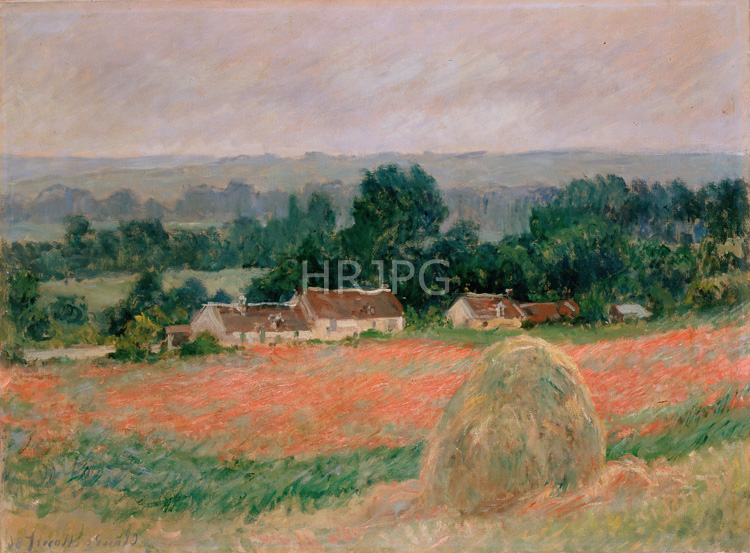
The visual logic of the painting is defined by the extraordinary mass of the haystack and its relationship to the expansive sky. Monet utilizes a palette of warm ochres, deep emeralds, and soft violets to represent the seasonal transition. The stack provides a rhythmic focal point that anchors the composition, its textured surface catching the brilliance of the sun and creating deep, chromatic shadows. The sky is a masterclass in atmospheric observation, with layers of moisture-laden clouds that diffuse the light across the meadow. He avoids hard outlines, relying instead on the juxtaposition of tonal values to define the forms and the immense depth of the field. The light is the primary actor, raking across the landscape and illuminating the edges of the stack with a natural clarity that makes the scene feel fresh and immediate.
Technically, Haystack at Giverny showcases Monet’s mastery of 'all-over' texture and the rejection of traditional chiaroscuro. He used thick impasto to build up the surface of the hay, giving the object a tangible, sculptural presence that reflects the materiality of the agricultural environment. He avoids the use of black, using deep blues and purples in the shadows to maintain a high-keyed luminosity. Historically, the early haystack paintings were successful both critically and commercially, proving that the Impressionist method could handle subjects of monumental structure and atmospheric beauty. Today, held in major collections such as the Musée d'Orsay and the Art Institute of Chicago, the painting is admired for its formal strength and its lyrical beauty. It remains a vital document of Monet's creative process, illustrating the bridge between his earlier outdoor observations and the visionary series of his later years.