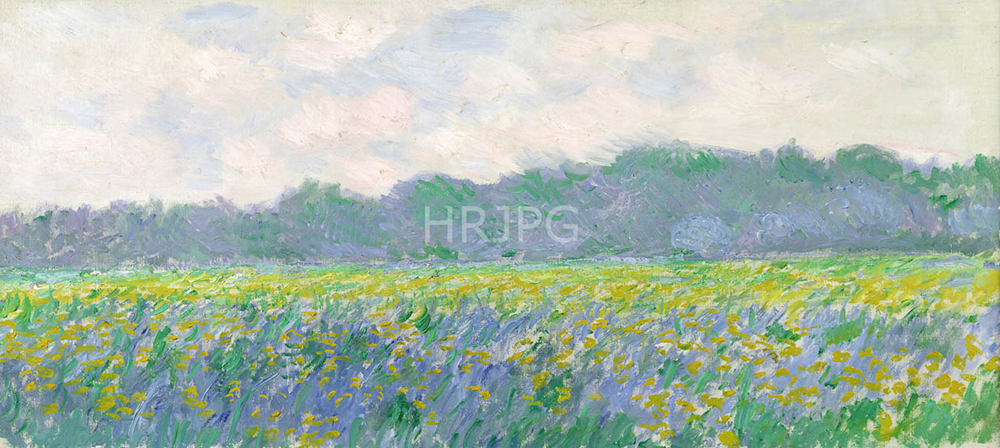
The visual center of the painting is the extraordinary horizontal expanse of the irises and the brilliant contrast between their deep yellows and the lush greens of the foliage. Monet utilizes a rich palette of bright cadmiums, soft ochres, and vibrant emeralds to represent the flowers. The trees in the background provide a rhythmic vertical accent that anchors the composition, leading the eye into the depth of the meadow. The sunlight filters through the atmosphere, creating a complex pattern of light across the flowers and the grass. He avoids hard outlines, relying instead on the vibration of color against color to define form and space. This 'all-over' texture creates a shimmering surface that mimics the sensory experience of standing in a sun-drenched field, feeling the warmth and vitality of the summer air.
Technically, Field of Yellow Irises at Giverny showcases Monet’s mastery of texture and his move toward a more gestural style. He applied the paint in thick, rhythmic dabs of impasto, giving the floral clusters a tangible, sculptural presence. He avoids the use of black, using deep indigos and violets in the shadows to maintain the painting's overall luminosity. Historically, the garden paintings of the late 1880s reflect the stability and peace Monet found in Giverny after decades of struggle. These works were admired for their freshness and their decorative beauty, proving that even a simple floral border could be a subject of immense artistic weight. Today, held in major collections such as the Musée d'Orsay, the painting remains a beloved icon of Impressionism, illustrating the perfect union between the artist’s revolutionary eye and the natural world.