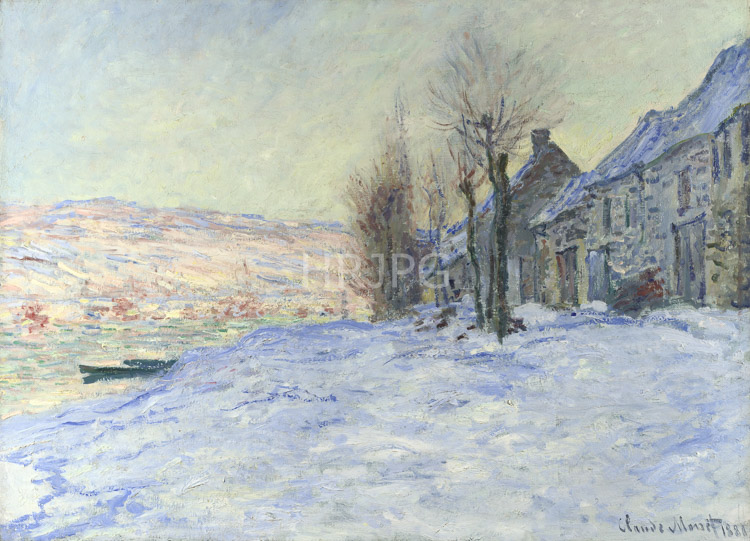
The visual logic of the painting is defined by the extraordinary contrast between the dark forms of the village buildings and the multifaceted 'white' of the snow-covered ground. Monet utilizes a palette dominated by icy blues, soft pinks, and leaden grays to represent the frozen atmosphere. The light is diffused and cool, suggesting a day of high clouds where the sun is muted, creating a soft, even luminosity across the scene. The shadows across the snow and the ruts in the road are rendered in deep purples and indigos, reflecting the color of the clear winter sky—a radical departure from the black shadows of traditional painting. The road provides a strong diagonal that leads the eye into the depth of the village, while the skeletal trees provide a vertical rhythm. This focus on the sensory 'impression' of the scene makes the air feel as tangible as the earth.
Technically, Lavacourt under Snow showcases Monet’s mastery of texture and his rejection of traditional perspective. He used thick impasto for the snow-covered banks, giving the landscape a tangible, sculptural presence. He avoids the use of black, using deep indigos and cool purples to define the forms and maintain a high-keyed luminosity despite the somber mood. Historically, the winter works of 1880-1881 were a major professional achievement, proving that the Impressionist method could find beauty in even the harshest of seasons. Today, versions of this work are held in major collections such as the Musée d'Orsay and the National Gallery of Art. It remains a vital link in his career, illustrating the moment when he moved from being a painter of modern life to a master of the universal, eternal landscape.