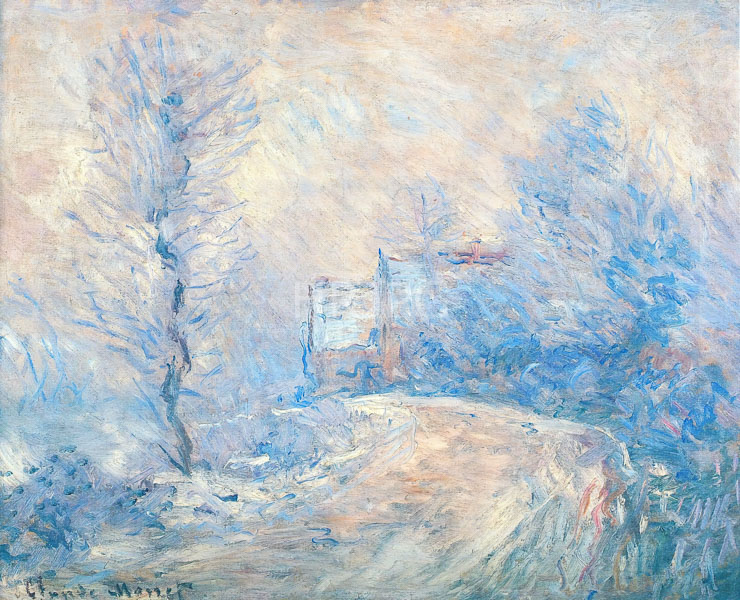
The visual logic of the painting is defined by the extraordinary contrast between the dark, skeletal forms of the trees and the multifaceted 'white' of the snow-covered ground. Monet utilizes a palette dominated by icy blues, soft pinks, and muted ochres to represent the frozen environment. The light is diffused and cool, suggesting a day of high clouds where the sun is muted, creating a soft, even luminosity across the canvas. The shadows across the road and the snowbanks are rendered in deep purples and indigos, reflecting the color of the clear winter sky. This chromatic approach was a radical departure from the flat black shadows of academic tradition. The road provides a strong diagonal that leads the eye into the depth of the village, while the vertical accents of the trees and houses anchor the composition. He avoids hard outlines, relying entirely on the vibration of color to define form and space.
Technically, The Entrance to Giverny under the Snow showcases Monet’s mastery of texture and 'broken color.' He used thick impasto for the heavy snow, giving the landscape a tangible, sculptural presence that mimics the sensory experience of standing in the cold, crisp air. He avoids the use of black entirely, using saturated blues and cool grays to maintain the painting's overall luminosity despite the somber winter mood. Historically, this work represents the foundation of his late-career obsession with the Giverny landscape. Today, held in major collections such as the Musée d'Orsay, the painting is admired for its formal clarity and its lyrical beauty. It remains a moving testament to Monet’s unrelenting creative spirit and his ability to find a universal language for the beauty of nature in all its fleeting forms.