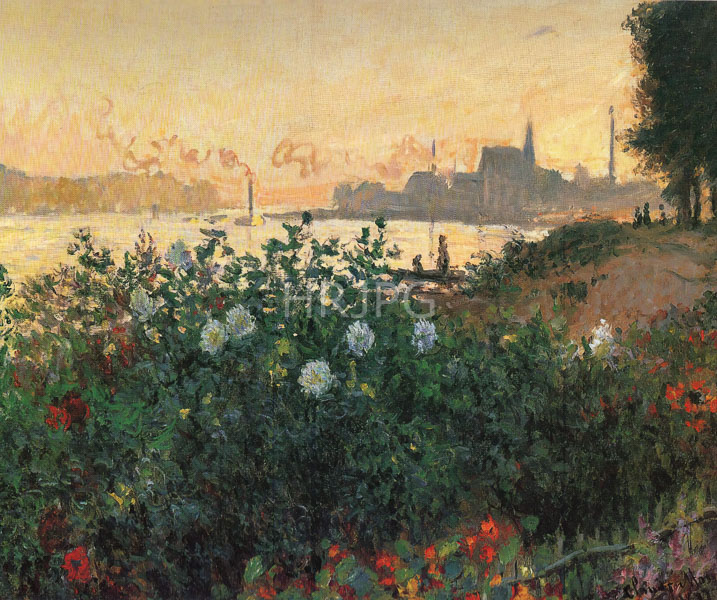
The visual logic of the painting is defined by the extraordinary play of dappled sunlight as it filters through the trees and illuminates the flowerbeds. Monet utilizes a palette of vibrant reds, deep emeralds, and brilliant whites to represent the summer light. The composition is immersive and dense, leading the viewer’s eye from the colorful blooms in the foreground toward the shimmering surface of the Seine and the distant sailing boats. The light is the primary actor, raking across the grass and creating a shimmering 'envelope' of warm air that unifies the environment. The shadows are rendered in deep purples and blues rather than traditional black, maintaining a consistent luminosity. This chromatic approach gives the entire scene a vibrating, lifelike quality that mimics the actual experience of human vision on a warm afternoon.
Technically, Flowered Riverbank Argenteuil showcases Monet’s mastery of 'all-over' texture and the rejection of traditional perspective. He used short, rhythmic brushstrokes for the flowers and more fluid, horizontal marks for the water, creating a textured surface that has a physical presence of its own. Historically, the Argenteuil works represent the moment when Impressionism reached its most cohesive and celebratory phase, reflecting the prosperity and peace of post-war France. Today, held in major collections such as the National Gallery of Art and the Musée d'Orsay, the painting is admired for its formal strength and its pioneering spirit. It serves as a vital document of Monet's creative process and his deep emotional connection to the landscape he so passionately recorded, reminding us that for him, the beauty of the world was found in the vibration of the light.