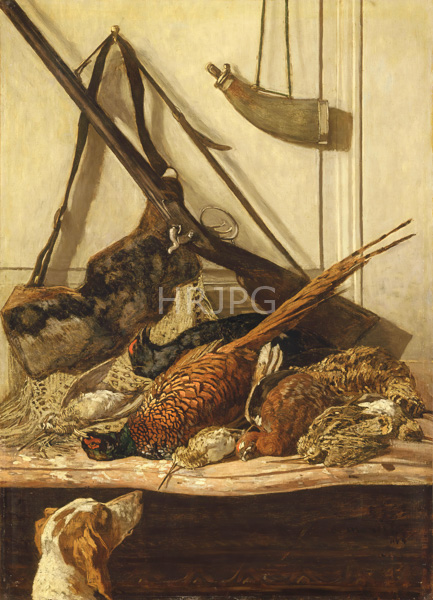
The visual logic of the painting is defined by the extraordinary rendering of texture and the high-contrast lighting typical of the 17th-century Dutch masters. Monet utilizes a palette of deep earthy browns, charcoal grays, and brilliant whites to represent the various surfaces of the animals. The light filters from a single source, raking across the scene to create deep, dramatic shadows that emphasize the volume of the forms. He uses a confident, impasto technique to suggest the softness of the feathers and the stiff fur of the hare. This focus on how light defines matter through color and value was already present even in his earliest academic exercises. He avoids the rigid, polished finish of the studio, favoring a more textured application of paint that gives the scene a sense of physical weight and presence.
Technically, Hunting Trophy showcases Monet’s early mastery of chiaroscuro and tonal relationships. He used a range of dark tones to build up the depth of the composition, pushing the subjects toward the viewer. Although he would later reject this dark palette in favor of high-keyed colors, his ability to render complex textures remains consistent throughout his career. Historically, this work remains a rare instance of his engagement with the traditional genre of the hunt. It reflects his early training in Le Havre and Paris before the formal birth of Impressionism. Today, held in major collections such as the Musée d'Orsay, the painting is admired for its technical brilliance and serves as a vital record of the artist's early maturity and his journey toward the light.