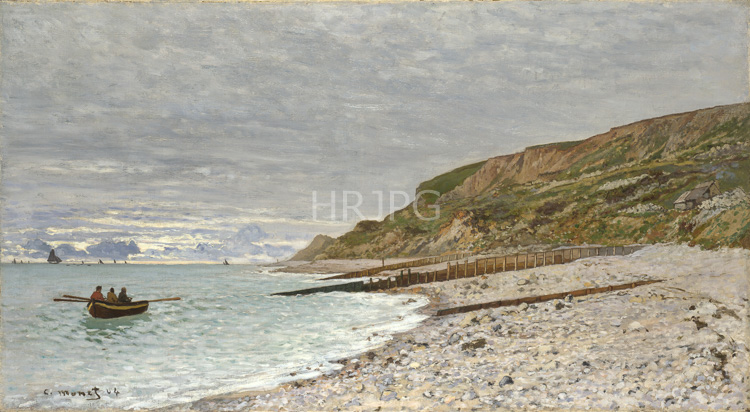
The visual center of the painting is the contrast between the dark, textured rocks of the shore and the fluid, shimmering expanse of the English Channel. Monet utilizes a palette of cool grays, deep indigos, and earthy browns, all unified by the soft, diffused light of an overcast day. The sky is a masterclass in early atmospheric perspective, with layers of heavy clouds that suggest the moisture and movement of the maritime air. The sailing ships in the distance are rendered with a tactile weight, their dark silhouettes providing a strong structural counterpoint to the horizontal sprawl of the sea. Unlike his later works, the forms here are solid and well-defined, yet the brushwork is already beginning to break free from the polished finish of the Salon. The light is the primary actor, raking across the water and illuminating the crests of the waves with a natural clarity.
Technically, La Pointe de la Heve Sainte-Adresse showcases Monet’s early mastery of texture and tonal harmony. He used a confident application of paint to build up the surface of the rocky shore and the water, giving the scene a tangible presence. He avoids traditional black even in the shadows, using deep blues and purples to maintain the painting's overall luminosity. This focus on the optical truth of a single moment—the way the clouds transform the colors of the sea—prefigures his lifelong obsession with 'instantaneity.' Historically, this painting represents the beginning of Monet’s 'en plein air' practice and his desire to find beauty in the direct observation of nature. Today, held in major collections such as the National Gallery in London, the painting is admired for its freshness and its pioneering spirit. It serves as a vital bridge between the Realism of the mid-19th century and the emerging Impressionist spirit.