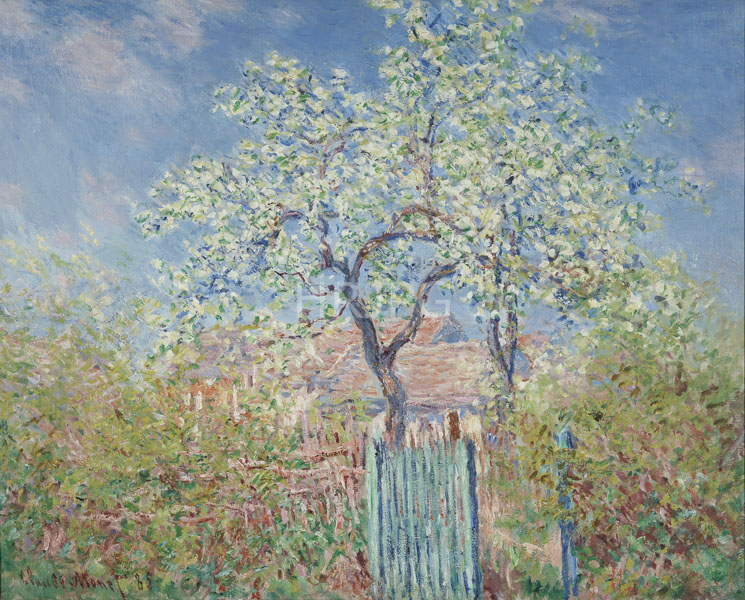
The visual impact of the painting is achieved through the extraordinary contrast between the brilliant white of the blossoms and the vibrant greens of the grass. Monet utilizes a palette of soft pinks, pale yellows, and emerald greens to represent the spring atmosphere. The pear tree provides a rhythmic focal point that anchors the composition, its branches rendered with short, gestural brushstrokes that suggest the delicate texture of the flowers. The sunlight is the primary actor, raking across the meadow and creating a shimmering 'envelope' of light that unifies the tree and the sky. He avoids hard outlines, relying instead on the vibration of color against color to define form and depth. This chromatic approach gives the entire scene a vibrating, lifelike quality that mimics the actual experience of human vision on a bright, breezy afternoon.
Technically, Pear Tree in Blossom showcases Monet’s mastery of 'broken color' and gestural application. He used a confident application of paint to build up the surface of the blossoms and the grass, giving the landscape a tangible presence. He avoids the use of black, using deep blues and purples in the shadows to maintain the painting's overall luminosity. Historically, the Giverny works of the mid-1880s reflect the stability and peace Monet found in his new home. Today, held in major collections such as the Museum of Fine Arts, Budapest, the painting is admired for its freshness and its lyrical beauty. It remains a moving testament to Monet’s unrelenting creative spirit and his ability to find a universal language for the beauty of nature, illustrating the perfect union between his revolutionary eye and the natural world he sought to record with such passion.