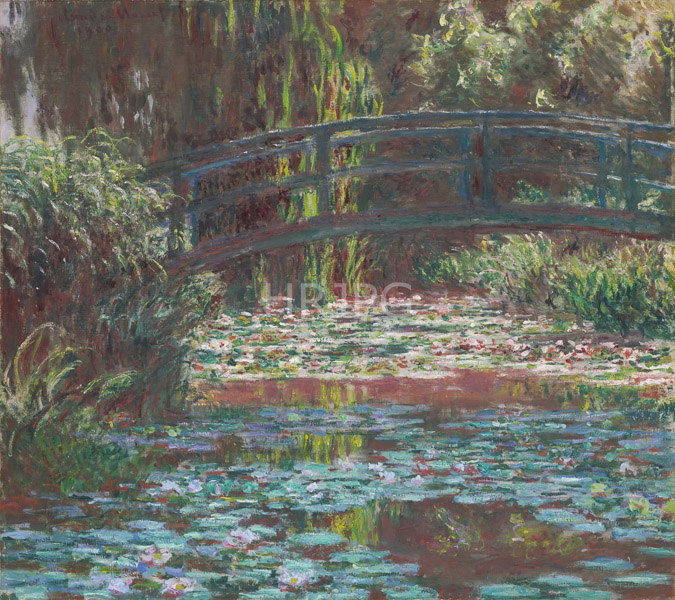
The visual logic of the painting is defined by its extraordinary sense of enclosure and layered depth. Monet creates a 'hortus conclusus' (enclosed garden), where the viewer is pulled into a self-contained microcosm of nature. The bridge, with its graceful arch, provides a strong horizontal and vertical structure that anchors the composition. Beneath it, the surface of the pond is a liquid mirror, reflecting the lush greenery of the surrounding weeping willows and the vibrant, floating islands of water lilies. Monet utilizes a rich and varied palette of emerald, chartreuse, and deep forest greens, punctuated by the brilliant pinks and whites of the blossoms. The sunlight filters through the canopy, creating a dappled pattern of highlights across the bridge’s railing and the water, suggesting the humid, still atmosphere of a summer morning.
Technically, Pond Water Lilies showcases Monet’s mastery of 'all-over' texture and chromatic vibration. He applied the paint in thick, rhythmic layers of impasto, particularly for the lilies and foliage, giving the surface a tangible, sculptural presence. He avoids traditional black even in the deepest recesses, using saturated purples and dark greens to suggest the cool shadows beneath the bridge. This approach ensures that the painting maintains a high-keyed luminosity, capturing the 'instantaneity' of the light before it shifts. Historically, the 1899 series was a critical triumph and solidified the Giverny garden as the most famous site in modern art. Today, held in major collections such as the National Gallery in London and the Musée d'Orsay, the painting is admired for its lyrical beauty and its profound sense of peace. It remains a cornerstone of 20th-century modernism, illustrating the moment when Monet’s garden became his entire universe.