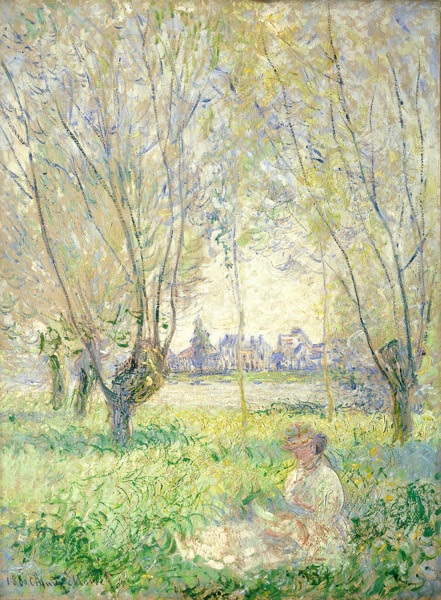
The visual logic of the painting is defined by the extraordinary sense of enclosure created by the willow’s branches. Monet utilizes a palette dominated by soft greens, pale ochres, and muted blues to represent the summer light. The tree provides a protective canopy, its rhythmic leaves rendered with short, gestural brushstrokes that suggest the movement of a gentle breeze. The seated figure is treated with a characteristic Impressionist shorthand, her form suggested by the play of light and shadow rather than hard outlines. The river in the background provides a horizontal counterpoint to the verticality of the tree, creating a sense of depth and spatial order. The light filters through the foliage, creating a dappled pattern of highlights across the woman's dress and the grass, suggesting the humid, still atmosphere of an afternoon by the river.
Technically, Woman Seated under the Willows showcases Monet’s mastery of 'broken color' and tonal harmony. He used a confident application of paint to build up the surface of the leaves and the grass, giving the scene a tangible presence. He avoids the use of black, using deep blues and purples in the shadows to maintain a high-keyed luminosity. Historically, the Vétheuil period was a major success for the artist, and the works he produced there were highly sought after by collectors. Today, held in major collections such as the National Gallery of Art, the painting is admired for its lyrical beauty and its technical virtuosity. It remains a vital document of Monet's creative process, illustrating the bridge between his earlier outdoor observations and the visionary landscapes of his later career, reminding us that for him, the world was a continuous symphony of light and reflection.