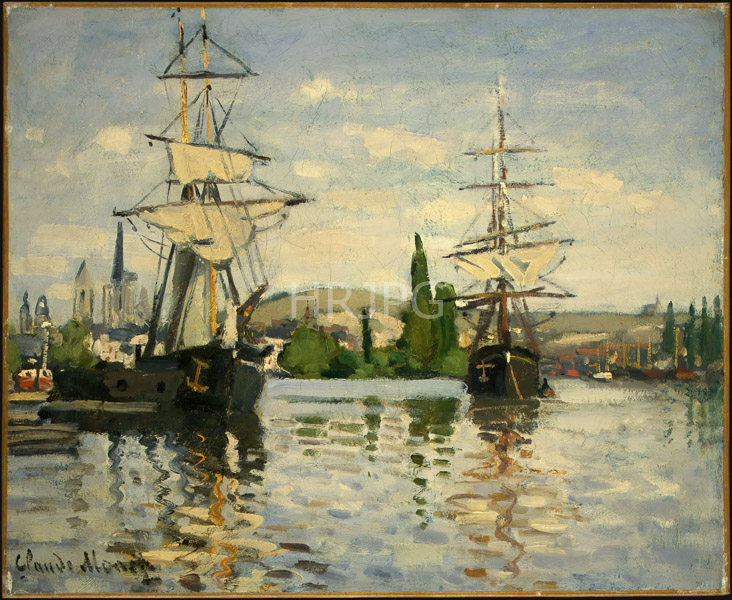
The visual logic of the painting is defined by the horizontal bands of the river and the sky, which create a sense of profound stillness and natural order. Monet utilizes a palette dominated by cool grays, deep indigos, and muted ochres to represent the river environment. The sky is a masterclass in early atmospheric perspective, with layers of soft, moisture-laden clouds that diffuse the light across the landscape. The boats are rendered with a tactile weight, their dark silhouettes and intricate rigging providing a strong structural counterpoint to the horizontal sprawl of the horizon. He avoids hard outlines, relying on the juxtaposition of tonal values to define the forms and the depth of the receding water. The light is the primary actor, raking across the water and illuminating the sides of the boats with a natural clarity.
Technically, Boats on the Seine showcases Monet’s early mastery of texture and tonal harmony. He used a confident application of paint to build up the surface of the water and the wooden hulls, giving the scene a tangible presence. He avoids traditional black even in the shadows, using deep blues and purples to maintain a consistent luminosity throughout. This focus on the optical truth of a single moment—the way the clouds transform the colors of the river—prefigures his lifelong obsession with 'instantaneity.' Historically, this painting represents the foundation of Monet’s river oeuvre and his lifelong connection to the Seine. Today, held in major collections such as the Musée d'Orsay, it serves as a vital bridge between the Realism of the mid-19th century and the emerging Impressionist spirit, reminding us that Monet's journey toward light began with a rigorous observation of the water.