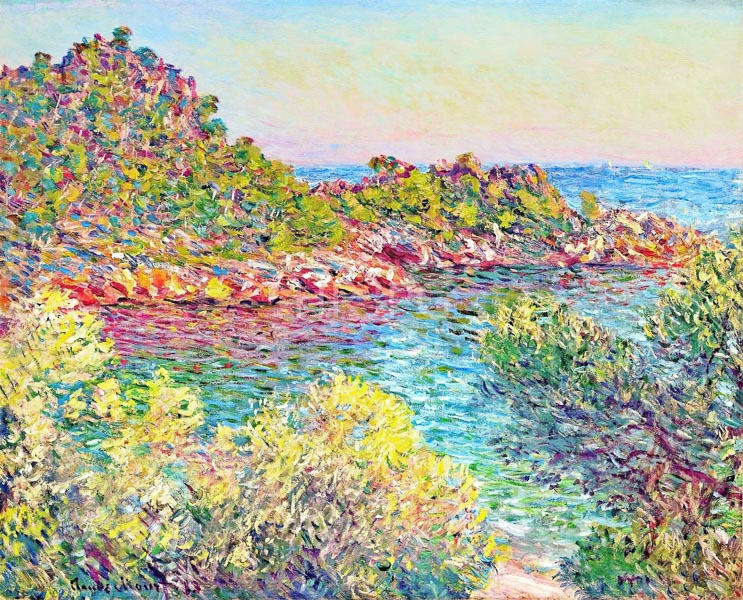
The composition of the painting is rhythmic and expansive, with the rugged mountains providing a vertical counterpoint to the horizontal sprawl of the sea. Monet utilizes a lush palette of warm ochres, deep emeralds, and brilliant azures, accented by the soft pinks of the rocky soil. The sunlight filters through the sparse vegetation, creating a complex pattern of light across the ground. Monet’s mastery of color theory is at its peak here; he shows how the intense sun bleaches the land while creating deep, saturated shadows filled with vibrant purples and blues rather than traditional black. There is no traditional detail in the distant hills; their forms are suggested by the vibration of color against color, creating a sense of shimmering movement as if the air itself is vibrating with heat.
Technically, Landscape near Monte Carlo showcases Monet’s triumph in capturing the Mediterranean light. His brushwork is energetic and textured, with thick applications of paint used to suggest the tactile quality of the foliage and the rugged earth. He avoids hard outlines, relying entirely on the vibration of color to define form and depth. Historically, this series was a critical success, demonstrating that the Impressionist method could be applied to environments far removed from the banks of the Seine. Today, held in major collections such as the Musée d'Orsay and the New Orleans Museum of Art, the painting remains a beloved icon of his southern campaign. It stands as a vital link in Monet’s career, illustrating the moment when he moved from being a painter of modern life to a master of pure, expressive color, forever changing the course of landscape painting.