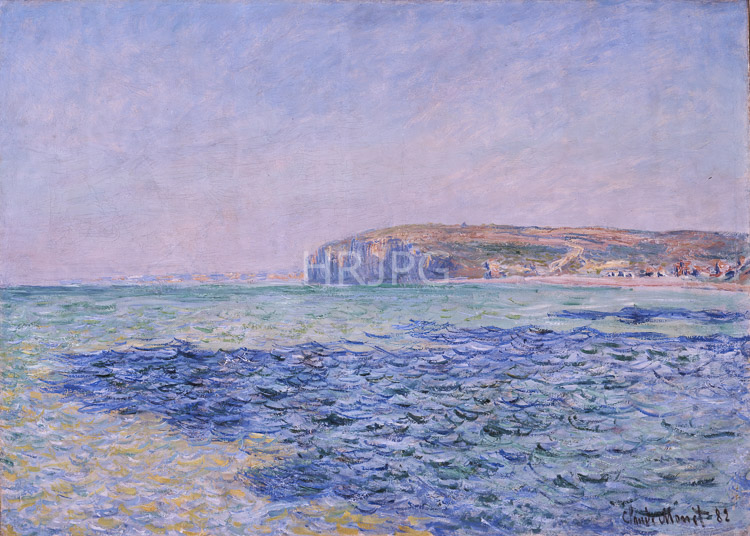
The visual logic of the painting is defined by the horizontal bands of the sea and the sky, which create a sense of expansive depth and space. Monet utilizes a palette of brilliant turquoises, soft violets, and warm ochres to represent the coastal atmosphere. The sky is a masterclass in atmospheric light, with pale blues and soft clouds suggesting a bright, breezy afternoon. The shadows across the water are the true stars of the work; Monet uses a complex range of cool purples and blues to suggest the depth and movement of the tide, demonstrating his rejection of traditional black. The light is the primary actor, raking across the water and creating a shimmering 'envelope' of air that makes the scene feel fresh and immediate. He avoids hard outlines, relying entirely on the vibration of color to define form and depth.
Technically, Shadows on the Sea at Pourville showcases Monet’s mastery of texture and light. He used horizontal, fluid strokes for the sea and more textured, broken marks for the foreground, giving the scene a tangible presence. Historically, the paintings of 1882 were successful both critically and commercially, proving that the Impressionist method could handle subjects of monumental structure and atmospheric beauty. Today, held in major collections like the Ny Carlsberg Glyptotek and the Musée d'Orsay, it remains a beloved example of his coastal oeuvre. It illustrates the perfect union between his revolutionary eye and the natural world he sought to record with such honesty and passion, reminding us that for Monet, the world was a continuous symphony of light and reflection.