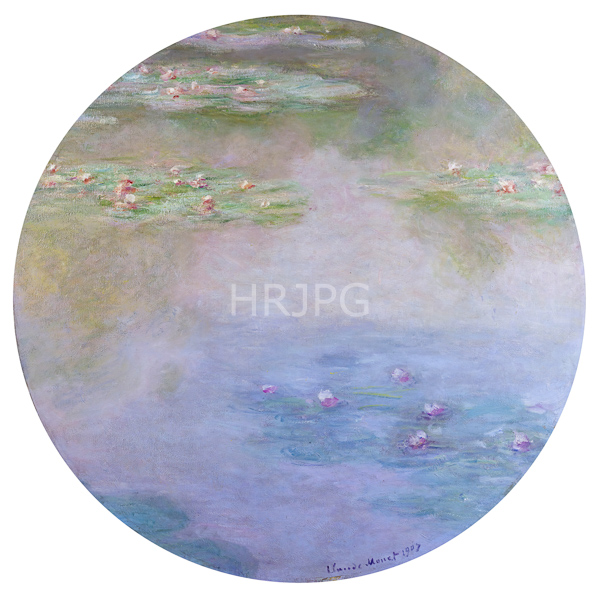
The visual impact of the painting is achieved through the extraordinary contrast between the deep, cool tones of the water and the fiery, luminous reflections of the sun. Monet utilizes a palette dominated by saturated purples, deep blues, and brilliant ochres. The vertical column of light in the center of the canvas acts as a primary focal point, drawing the eye through the depth of the composition toward an unseen horizon. The water lilies are rendered with a characteristic shorthand, their blossoms catching the golden light and glowing with a jewel-like intensity. This composition, where the sky is only present through its reflection on the water, was a radical departure from traditional landscape painting, pushing the movement toward pure abstraction. The light is the primary actor, transforming the pond into a visionary theater of color.
Technically, the 1907 Water Lilies showcases Monet’s mastery of 'all-over' texture and chromatic vibration. He applied the paint in thick, gestural layers of impasto, particularly for the sunlit highlights on the water and the blossoms. The brushwork is exceptionally rhythmic and energetic, reflecting the speed required to capture the fleeting 'evening effect' before the sun disappeared. He avoids the use of black, using deep indigos and violets to create the profound shadows, ensuring that the painting maintains a high-keyed luminosity throughout. Historically, the 1907 series was a major highlight of the 1909 exhibition at Durand-Ruel, where it was hailed for its poetry and revolutionary treatment of light. Today, held in major collections like the Museum of Fine Arts, Houston, it remains a testament to his genius in capturing the intangible essence of nature.