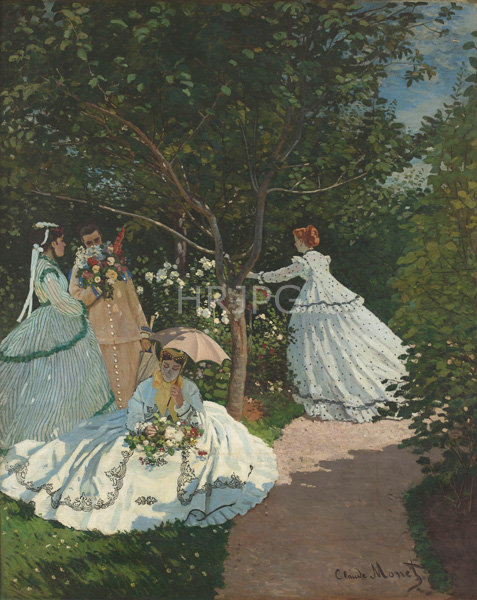
The visual impact of the painting is achieved through the extraordinary contrast between the brilliant white of the women’s dresses and the deep, varied greens of the garden foliage. Monet utilizes the optical principle of high-keyed color to represent the intensity of the summer sun. The sunlight filters through the trees, creating a complex pattern of dappled light across the ground and the fabric. He avoids traditional chiaroscuro, relying instead on the juxtaposition of tonal values to suggest depth and volume. The dresses are treated as surfaces for the study of light and reflection, catching the cool blue shadows and the warm glow of the sun. This focus on the sensory 'impression' of the scene—capturing the feeling of a sun-drenched garden through color—was a radical innovation that prefigured the birth of Impressionism.
Technically, Women in the Garden showcases Monet’s early mastery of texture and his rejection of the 'licked' finish of the Paris Salon. The brushwork is varied and confident, with more detail in the figures and a more gestural, expressive style in the flowers and leaves. He avoids the use of black even in the deepest shadows, using deep blues and purples to maintain a high-keyed luminosity across the entire canvas. Historically, the painting was rejected by the Salon of 1867, with critics complaining about the visible brushstrokes and the lack of a traditional narrative. However, it was later purchased by Frédéric Bazille to support his friend. Today, housed in the Musée d'Orsay, the painting is admired as a pioneering masterpiece of early modernism. It remains a moving testament to Monet’s youthful ambition and his unrelenting commitment to recording the world as a symphony of light.