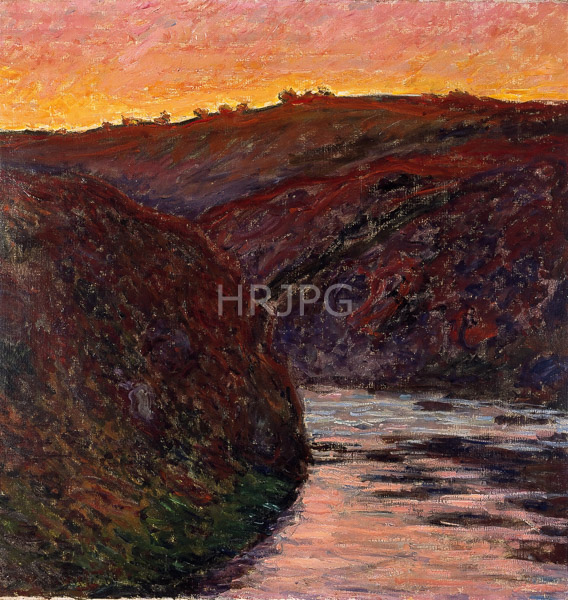
The visual logic of the painting is defined by the extraordinary contrast between the dark, massive hills and the luminous, golden light of the sky. Monet utilizes a palette of fiery oranges, deep purples, and earthy emeralds to represent the sunset 'envelope.' The sky is a masterclass in atmospheric observation, with churning clouds that reflect the warmth of the sun. The river in the foreground is rendered with rhythmic, horizontal strokes that capture the shimmering reflections of the sky and the dark shadows of the hills. He avoids hard outlines entirely, relying on the vibration of color to define form and the immense depth of the valley. This focus on the 'instantaneity' of the light—capturing the visual sensation of a single moment before the sun disappeared—was the ultimate goal of his Creuse campaign.
Technically, The Creuse at Sunset showcases Monet’s mastery of texture and tonal unity. He used thick impasto to build up the surface of the hills, giving the landscape a tangible, sculptural presence. He avoids the use of black, using deep indigos and violets in the shadows to maintain the painting's luminosity despite the somber mood of the valley. Historically, the Creuse series was one of his first systematic efforts to explore a single location under extreme weather conditions. Today, held in major collections such as the Musée d'Orsay and the Art Institute of Chicago, the painting is admired for its raw power and its profound sense of solitude. It remains a vital link in his career, illustrating the moment when he moved from being a painter of modern life to a master of the universal, eternal landscape.