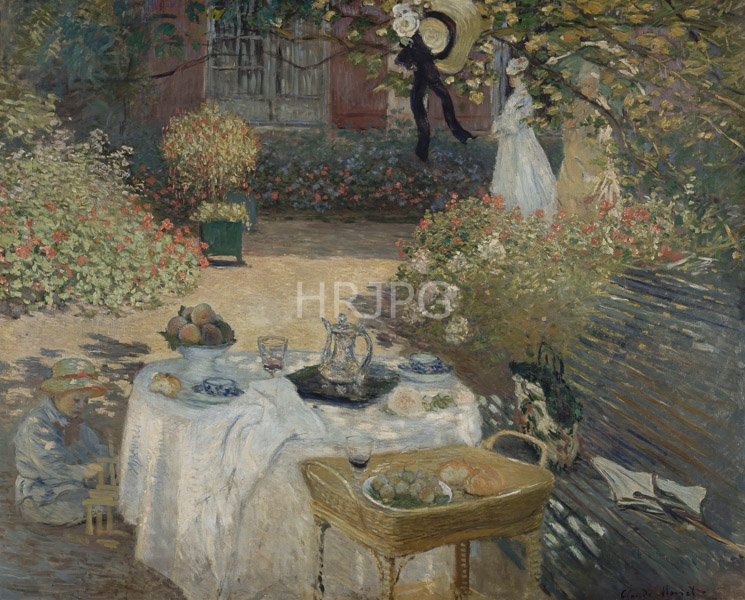
The visual logic of the painting is defined by the extraordinary play of dappled sunlight filtering through the trees. Monet utilizes a palette of vibrant greens, soft ochres, and brilliant whites to represent the summer light. The table, laden with remnants of the meal and a colorful bouquet, provides a strong structural center for the composition. The light is the primary actor, raking across the grass and illuminating the white tablecloth, creating a shimmering 'envelope' of warm air that unifies the figures and the environment. The shadows are rendered in deep purples and blues rather than traditional black, maintaining a consistent luminosity. This chromatic approach gives the entire scene a vibrating, lifelike quality that mimics the actual experience of human vision on a warm afternoon.
Technically, The Luncheon showcases Monet’s mastery of 'all-over' texture and the rejection of traditional perspective. He used short, rhythmic brushstrokes for the foliage and flowers, and more fluid strokes for the garments, creating a textured surface that has a physical presence of its own. Historically, this work was a major professional achievement, demonstrating his ability to handle complex, large-scale outdoor figure compositions. It reflects the post-war prosperity and the desire of the Impressionists to find beauty in the contemporary environment of the suburbs. Today, held in the collection of the Musée d'Orsay, the painting remains a beloved icon of modern art. It serves as a vital document of Monet's creative process and his deep emotional connection to his family and the sanctuary of his garden, forever capturing the essence of the French summer.