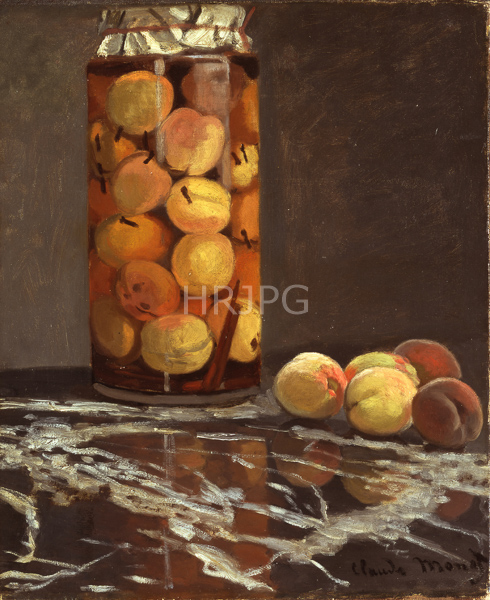
The visual center of the painting is the extraordinary rendering of the glass jar and the syrup inside. Monet utilizes a rich palette of deep ochres, warm ambers, and brilliant highlights to represent the texture of the fruit and the transparency of the glass. The light filters from a single source, raking across the table and creating complex reflections on the jar’s surface. This focus on how light penetrates matter and defines volume through color rather than line was a radical innovation. The fresh peaches in the foreground are treated with a tactile weight, their fuzzy skins captured in a play of light and shadow. He avoids the rigid, polished finish of academic still-life, favoring a more textured and gestural application of paint that gives the scene a sense of presence and life.
Technically, A Jar of Peaches showcases Monet’s early mastery of tonal values and his ability to render texture through color. He used a confident application of paint to build up the surface of the fruit and the table, giving the objects a tangible, sculptural quality. The shadows are rendered with a sophisticated range of dark tones that avoid flat black, creating a sense of depth and luminosity within the domestic interior. Historically, this work remains a rare and significant instance of his early career, reflecting his ability to find monumental beauty in the mundane tools of the kitchen. Today, held in major collections such as the Dresden State Art Collections, the painting is admired for its technical brilliance and its unique place in Monet’s oeuvre, reminding us that his journey toward light began with a rigorous observation of the earth and its fruits.