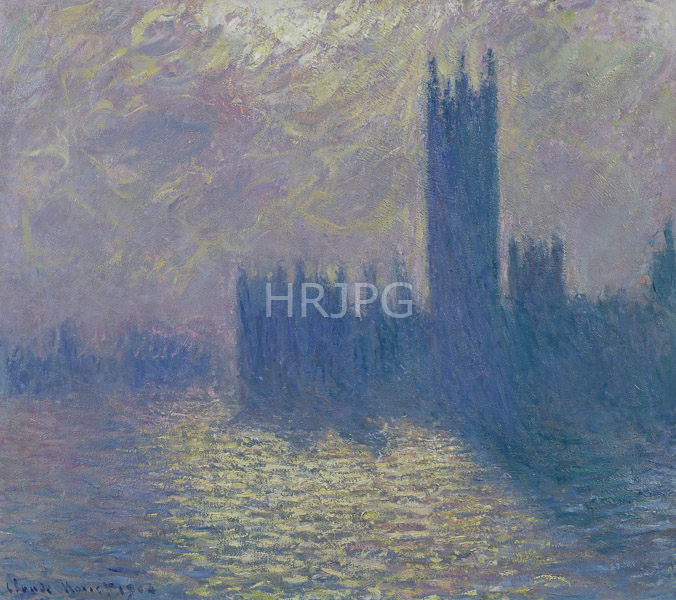
The visual logic of the painting is defined by the extraordinary contrast between the dark, silhouetted form of the buildings and the heavy, gray-blue tones of the sky. Monet utilizes a palette dominated by deep indigos, murky greens, and soft violets to represent the stormy 'envelope.' The sky is a masterclass in atmospheric observation, with churning clouds that suggest a powerful wind and the scent of rain. The Houses of Parliament are rendered as a massive, simplified presence, their spires cutting into the sky with a sense of architectural dignity. The Thames in the foreground is a masterclass in Impressionist water, rendered with horizontal, rhythmic brushstrokes that capture the turbulent reflections of the sky and the dark shadows of the building. He avoids hard outlines, allowing the atmosphere to blur the boundaries between the stone and the air.
Technically, Houses of Parliament Stormy Sky showcases Monet’s move toward a more gestural and expressive application of paint. He used thick impasto to build up the surface of the clouds and the water, giving the scene a tangible, sculptural presence. He avoids traditional black even in the deepest shadows, using saturated purples and cool blues to maintain the painting's overall luminosity. This focus on the optical truth of a single, unrepeatable moment—capturing the storm before the rain fell—was the ultimate fulfillment of the Impressionist project. Historically, the London series was a massive critical success, solidifying Monet's reputation as the preeminent landscape painter of his generation. Today, versions of this work are held in major collections such as the Palais des Beaux-Arts de Lille and the Musée d'Orsay, where they are admired for their raw power and their visionary modernism.