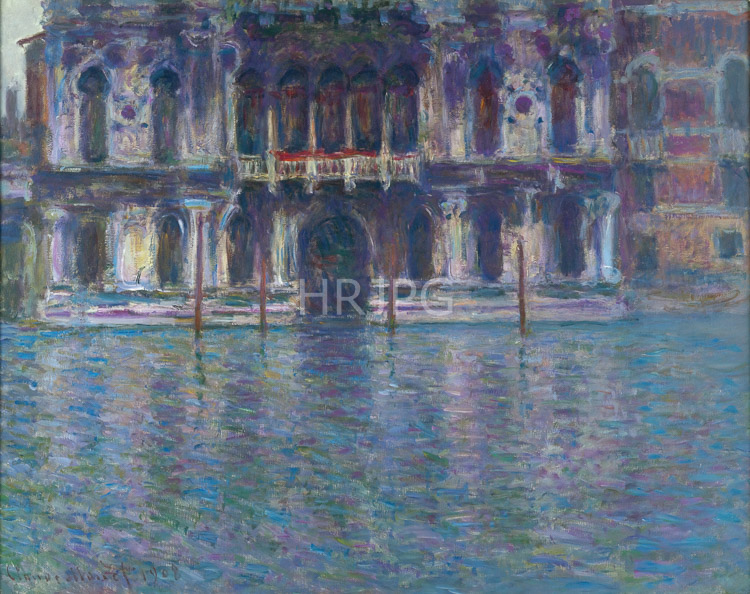
The visual logic of the painting is defined by its extraordinary tonal harmony and the rhythmic patterns of the palace's windows and arches. Monet utilizes a palette dominated by warm ochres, pale pinks, and soft violets to represent the ancient stone, which seems to absorb and radiate the autumn sun. The building is rendered as a play of light and shadow, where the dark openings of the facade create a rhythmic verticality. The Grand Canal in the foreground is a masterclass in Impressionist reflection; the water is rendered with horizontal, shimmering strokes of azure and gold, mirroring the colors of the building and the sky. He avoids hard outlines, allowing the moisture-laden air of the lagoon to blur the boundaries between the architecture and the water, creating a sense of profound stillness and natural order.
Technically, The Palazzo Contarini showcases Monet’s mastery of 'all-over' texture and the rejection of traditional perspective. He chose a vantage point from a boat on the water, which allowed him to eliminate the ground and the shore, focusing the viewer’s eye entirely on the surface of the facade and the reflections. The brushwork is varied and confident; he uses short, staccato marks for the architectural details and broader strokes for the canal. Historically, the Venice series was a major triumph for Monet, proving that his method could be applied to a site with a massive artistic tradition with profound success. Today, held in major collections such as the Nahmad Collection and private institutions, the painting remains a beloved icon of late Impressionism. It illustrates the perfect union between the artist’s revolutionary eye and the timeless beauty of the Italian lagoon.