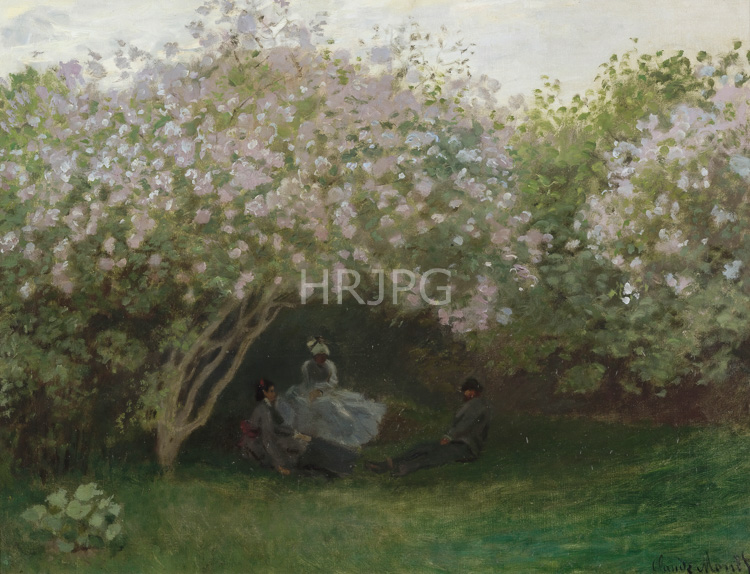
The visual center of the painting is the explosion of purple and white blossoms, which Monet renders with a tactile weight and rhythmic energy. He utilizes a palette of deep mauves, soft pinks, and vibrant greens, all set against the cool, diffused light of a 'grey day.' The sky is heavy with moisture, its soft light blurring the outlines of the houses in the distance and softening the edges of the foliage. He avoids hard outlines, relying instead on the juxtaposition of tonal values to define form and depth. This focus on the sensory 'impression' of the scene—capturing the scent and the moisture of the air through color—was a radical innovation in landscape painting. The figures resting beneath the bushes provide a sense of scale and a human element, highlighting the peace and leisure of the suburban summer.
Technically, Lilacs Grey Weather showcases Monet’s early mastery of 'broken color' and tonal harmony. He used short, staccato brushstrokes to describe the individual blossoms and the rustling leaves, creating a vibrating surface that mimics the sensory experience of standing in a garden. He avoids the use of black, using deep blues and purples in the shadows to maintain the painting's high-keyed luminosity despite the overcast sky. Historically, this work reflects the post-war optimism of the early 1870s in France and the emergence of the garden as a primary subject for modern art. Today, held in the collection of the Musée d'Orsay, the painting is admired for its freshness and its pioneering spirit. It remains a cornerstone of early Impressionism, illustrating the perfect union between the artist’s revolutionary eye and the natural world he sought to record with such honesty and passion.