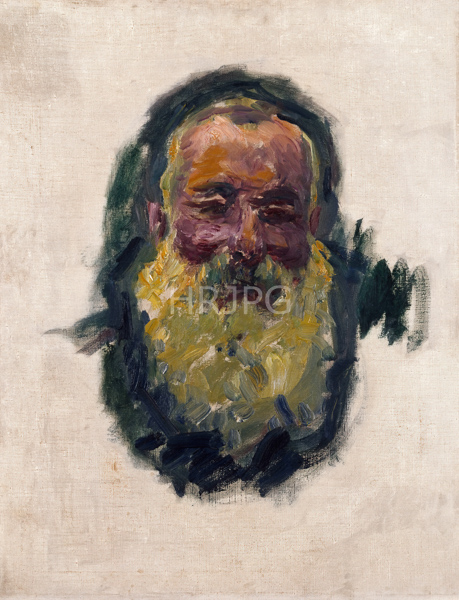
The visual logic of the painting is defined by the sophisticated interplay of light and shadow on the artist's face and clothing. Monet utilizes a palette dominated by deep indigos, warm ochres, and subtle grays. The lighting is directional, raking across his features to emphasize the weathered texture of his skin and the concentration in his eyes. Even in this portrait, he avoids flat black, using cool purples and blues in the shadows of his beard and jacket to maintain the painting's overall luminosity. The background is an atmospheric, neutral space that pushes his figure directly toward the viewer, creating a confrontational and modern experience. His gaze is steady and focused, reflecting the intense visual discipline required for a lifetime of 'en plein air' observation.
Technically, the 1917 Self-Portrait showcases Monet’s mastery of texture and his move toward a more gestural, expressive style. The brushwork in his beard and the fabric of his beret is vigorous and free, matching the radical nature of his late landscapes. He used a confident application of paint to build up the surface of the forehead and nose, giving the head a tangible, sculptural presence. Historically, this work represents a moment of synthesis in Monet's life, as he was deep into his final 'Grandes Décorations' project. Today, housed in the Musée d'Orsay, it remains one of the most famous artist self-portraits in history. It serves as a reminder that the Impressionist revolution was a personal commitment to a new way of being in the world, forever anchoring Monet’s image in the light he spent his life pursuing.