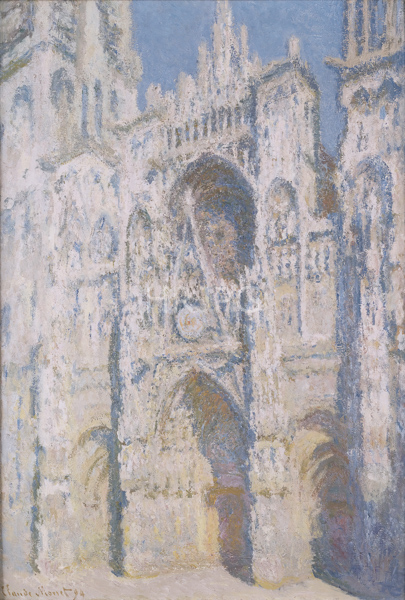
The visual logic of the painting is defined by the extraordinary density of the brushwork and the nearly total removal of traditional perspective. Monet utilizes a palette dominated by pale blues, soft yellows, and deep violet shadows. The facade of the cathedral is rendered as a massive, vibrating field of color, where the rhythmic arches and carvings create a textured surface that has a physical, almost sculptural presence. He avoids hard lines, relying entirely on the vibration of color to define form and depth. The shadows in the deep recesses of the portal are filled with cool purples and blues, maintaining a high-keyed luminosity throughout the composition. The light is the primary actor, raking across the stone and creating a shimmering 'envelope' of air that makes the ancient building feel alive and breathing.
Technically, the Rouen Cathedral series pushed Monet to the limits of his optical endurance. He worked on dozens of canvases simultaneously, moving between them as the light moved across the facade. The surface of the painting is built up with thick, crusty layers of impasto, giving it a tactile quality that mirrors the weathered stone. Historically, the exhibition of these cathedral paintings in 1895 was a massive success, hailed as a triumph of modern vision. Today, versions of this work are held in major museums such as the Musée d'Orsay and the Metropolitan Museum of Art. It remains a cornerstone of modern art history, illustrating the moment when art broke away from descriptive realism to embrace the visionary power of pure light, turning a monument of faith into a monument of sight.