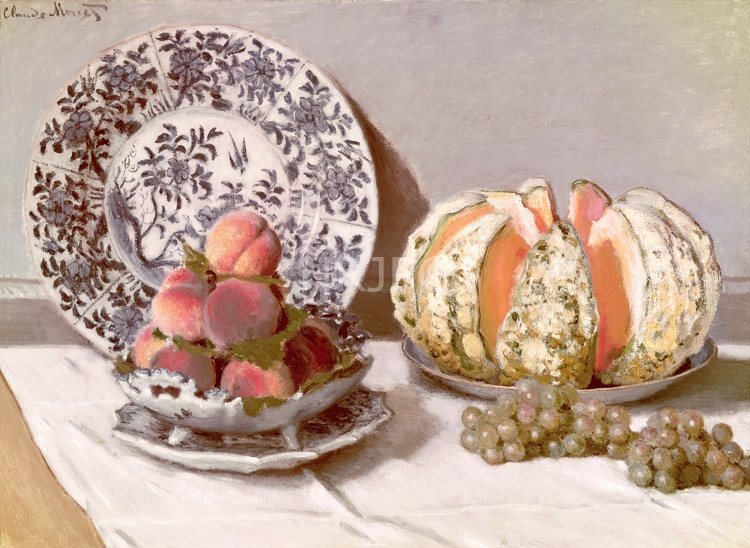
The visual logic of the painting is driven by the sheer variety of organic forms and the complex interplay of colors against a relatively neutral background. Monet treats each element with a distinct textural weight; the rough, netted skin of the melon is rendered with thick, tactile brushstrokes that suggest its density, while the delicate, translucent skin of the grapes is captured with lighter touches. The palette is an orchestration of warm ochres, deep greens, and brilliant whites. The white surface of the tablecloth acts as a primary stage for the study of light and reflection; Monet captures how the sunlight bleaches the fabric and how the shadows are filled with reflected hues. The tabletop provides a solid, horizontal anchor for the composition, creating a sense of three-dimensional space and material presence.
Technically, Still Life with a Melon showcases Monet’s fascination with how light penetrates surfaces and defines volume through color rather than line. He avoids hard outlines, building up the forms through a series of tonal shifts and value relationships. He used a confident application of paint to build up the surface of the fruit, giving it a tangible presence. Historically, this work demonstrates that his revolutionary method could be applied to traditional genres with profound success. Today, held in major collections such as the Museu Calouste Gulbenkian or the Metropolitan Museum of Art, the painting reminds us that Monet’s journey toward abstraction was rooted in a rigorous observation of the material world. It remains a timeless celebration of abundance and the ephemeral beauty of nature, captured with a technical brilliance that continues to inspire awe for its vibrant portrayal of light on a simple table.