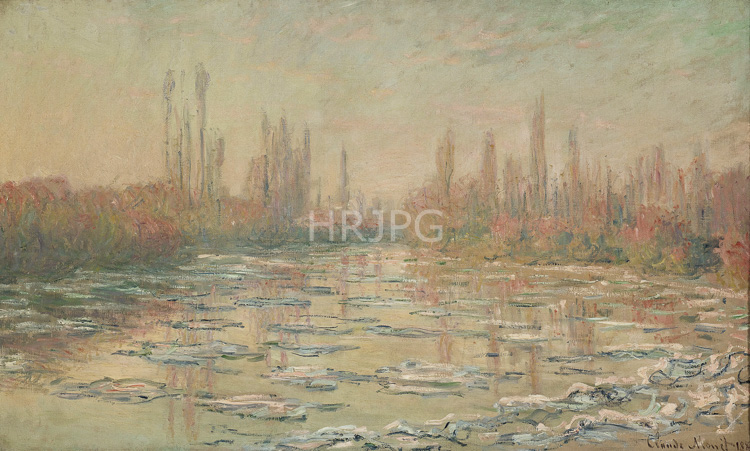
The visual logic of the painting is defined by the horizontal expanse of the river and the rhythmic, chaotic patterns of the ice cakes. Monet utilizes a restricted and sophisticated palette of leaden grays, murky greens, and soft lavenders to represent the 'grey weather.' The sky is a masterclass in atmospheric observation, with heavy, moisture-laden clouds that diffuse the light, blurring the distant hills and the skeletal trees along the riverbank. The ice floes are rendered with thick, textured impasto, giving them a tangible, sculptural presence amidst the dark water. He avoids traditional black even in the deepest shadows, using saturated purples and deep indigos to suggest the coldness and depth of the Seine. This ensures that the painting maintains a high-keyed luminosity even in its somber mood.
Technically, the Floating Ice series represents one of Monet's first systematic efforts to explore a single subject under varying weather conditions. He worked 'en plein air' in the freezing cold, recording the optical truth of the frozen environment. The brushwork is vigorous and rhythmic, mirroring the physical energy of the moving ice. Historically, this work reflects the artist’s resilience during a period of deep personal tragedy and his transition toward a more introspective and series-driven landscape practice. Today, held in major institutions like the Musée d'Orsay and the University of Michigan Museum of Art, the painting remains a moving testament to Monet’s eye and his unrelenting quest to record the truth of nature in all its fleeting and varied forms, reminding us that for him, the world was a continuous symphony of light and time.