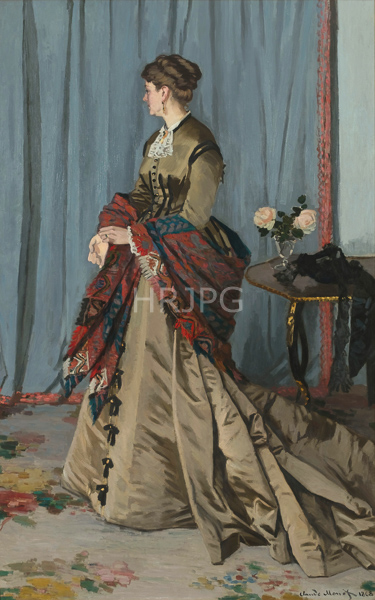
The visual logic of the painting is defined by the extraordinary rendering of the subject’s golden silk dress and the heavy, patterned carpet. Monet utilizes a sophisticated palette of deep ochres, warm browns, and varied grays to represent the wealthy interior. The light filters from an unseen source, raking across the silk to create a shimmering field of highlights and shadows. He uses a confident, impasto technique to suggest the weight and movement of the fabric, making the dress feel as if it is vibrating with life. The dark background and the heavy floral curtains provide a strong structural framework that pushes the figure toward the viewer, creating an intimate yet formal experience. He avoids the rigid, polished finish of academic portraiture, favoring a more textured and gestural application of paint that prefigures his later landscape style.
Technically, the Portrait of Madame Gaudibert showcases Monet’s fascination with how light defines volume and texture through tonal relationships. He used a range of saturated colors to build up the surface of the silk, avoiding hard outlines in favor of color juxtaposition. The shadows are filled with reflected light and cool tones, maintaining a high-keyed luminosity despite the interior setting. Historically, this work remains a rare instance where Monet engaged with high-society portraiture. While he would soon move away from the human figure to focus almost entirely on the landscape, this painting proves his technical virtuosity in handling the human form and the material world. Today, held in the Musée d'Orsay, it is admired as a vital document of the artist's early maturity and a masterpiece of 19th-century figure painting.