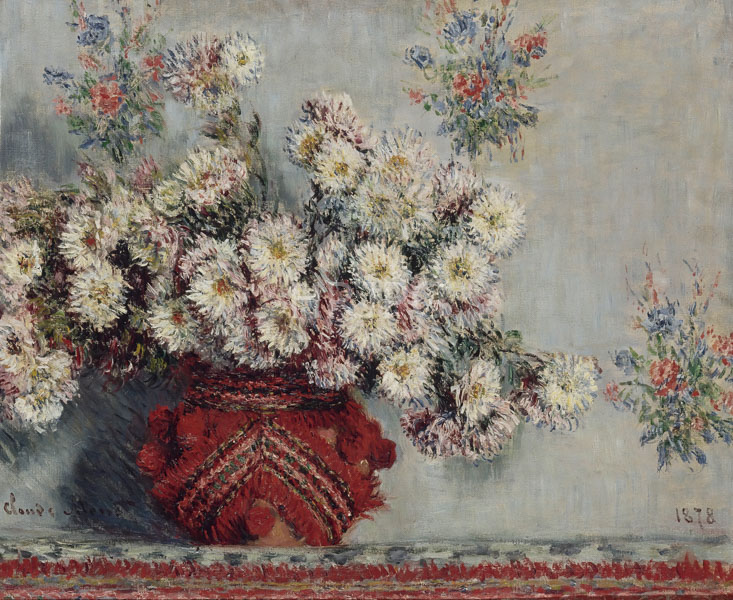
The visual center of the painting is the dense, rhythmic explosion of the flower heads, which Monet renders with a tactile weight and complex variety of color. He utilizes a palette of deep magentas, soft pinks, and brilliant yellows, all set against a neutral, dark background that pushes the flowers directly toward the viewer. The brushwork is exceptionally free and gestural; he uses short, staccato dabs to suggest the individual petals and the coarse texture of the foliage. This creates a vibrating surface that mimics the sensory experience of a fresh bouquet. He avoids traditional black even in the deep shadows between the blossoms, using saturated purples and cool blues to maintain the painting's overall luminosity. The light is diffused, raking across the petals to define their volume through color rather than hard outlines, reflecting his burgeoning Impressionist principles.
Technically, Chrysanthemums showcases Monet’s fascination with how light defines volume and space through the juxtaposition of tonal values. He used a confident application of paint to build up the surface of the flowers, giving them a physical, almost sculptural presence. Historically, this work was well-received, demonstrating that his revolutionary method could be applied to traditional genres with profound success. Today, held in major collections such as the Musée d'Orsay and the Metropolitan Museum of Art, the painting is admired for its freshness and its lyrical beauty. It serves as a reminder that for Monet, every subject—whether a cathedral or a simple bouquet of garden flowers—was a vehicle for the same radical investigation into the nature of perception and the beauty of the present moment.